
Water Heater Repair vs Replace: What Los Angeles Homeowners Need to Know in 2026
Deciding between water heater repair vs replace comes down to three factors: the unit’s age, the cost of the fix relative to a new unit, and whether your current water heater is meeting your household’s demand. If repair costs exceed 50% of the price of a comparable new unit, replacement almost always wins on total cost over time.
Most homeowners in the Los Angeles area face this decision when a cold shower hits without warning. That moment of frustration is actually the worst time to make a $1,000-plus decision under pressure.
Who this is for: This article is written for Los Angeles homeowners who own their water heater and are staring down a repair estimate, trying to decide if fixing the unit makes financial sense or if a full replacement is the smarter move. Not for: Renters whose landlord handles water heater maintenance, or homeowners whose unit is under warranty and has a clear manufacturer repair path already in motion.
The Age Rule That Changes Everything
Water heaters have a predictable lifespan. Tank-style units typically last 8 to 12 years. Tankless units can stretch to 20 years with proper maintenance. Those aren’t vague estimates; the U.S. Department of Energy (DOE) publishes guidance aligning with those ranges, and manufacturers like Rheem and Bradford White build their warranty structures around them.
Here’s the practical implication. If your tank unit is 10 years old and needs a $600 heat exchanger repair, that repair buys you, at best, 2 more years before the next failure. A new 50-gallon gas water heater from Bradford White runs approximately $900 to $1,200 installed in the Los Angeles market as of 2026. Spending $600 to extend a unit 2 years versus spending $1,100 on a fresh 10-year unit is not a close call.
The catch is that a lot of homeowners don’t know their unit’s age. Check the serial number. Most major manufacturers encode the manufacturing date into the first four characters of the serial number. Rheem, for example, uses the format where the first letter represents the month and the next two digits represent the year. A serial number starting with “B22” was made in February 2022.
The 50% Rule: Repair Estimates in Plain Numbers
The plumbing industry commonly applies the “50% rule” to decide between repair and replacement: if the repair costs more than half the price of a new comparable unit, replace it. This is not a hard law, but it holds up well in practice.
Here is a side-by-side comparison that reflects real Los Angeles cost ranges for 2026:
| Repair Scenario | Estimated Repair Cost | New Unit Installed Cost | Decision |
|---|---|---|---|
| Thermocouple replacement (gas unit) | $150 to $200 | $900 to $1,200 | Repair makes sense |
| Anode rod replacement | $200 to $300 | $900 to $1,200 | Repair makes sense |
| Heating element failure (electric) | $250 to $400 | $850 to $1,100 | Repair if unit is under 8 years old |
| Sediment buildup, flush needed | $100 to $175 | $900 to $1,200 | Repair makes sense |
| Leaking tank (bottom seam) | $0 (not repairable) | $900 to $1,200 | Replace immediately |
| Cracked heat exchanger (tankless) | $600 to $900 | $1,800 to $3,000 | Evaluate age, may repair |
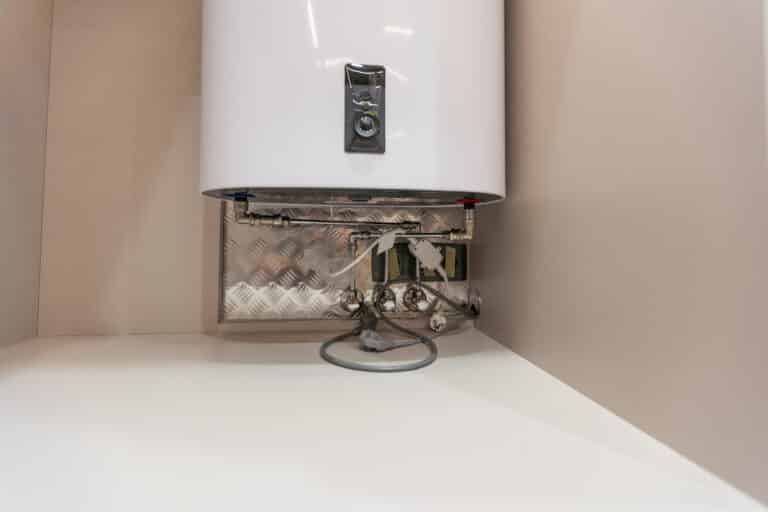
A leaking tank at the bottom seam is the one scenario where the decision is instant. Water pooling under the unit means the tank’s inner lining has corroded through. No patch or part fixes that. You are replacing it that day.
What usually trips people up here is misidentifying the source of the leak. Water dripping from the pressure relief valve or supply line connections is a repair. Water pooling under the tank base itself is not.
Efficiency Losses That Don't Show Up in the Repair Estimate
A repair estimate from a plumber tells you what it costs to fix the broken part. It doesn’t tell you what the unit is costing you in energy waste every month. Older tank water heaters lose standby heat through the tank walls, a loss called “standby heat loss.” Units built before 2015 often don’t meet the current National Appliance Energy Conservation Act (NAECA) efficiency standards that took effect in April 2015.
If your unit was installed before 2015, it may be a significant contributor to your utility bill. In California, where natural gas prices have increased substantially through 2025 and into 2026, this matters more than it did five years ago.
In practice, the pattern we keep seeing is homeowners fixing a $250 heating element on a 13-year-old water heater and continuing to pay elevated gas or electric bills for another 2 years before the tank finally fails. The repair looked cheap. The total cost over that extended period was not.
A new Energy Star-certified unit can reduce water heating costs by 8% to 14% compared to a standard unit, according to the U.S. Environmental Protection Agency (EPA). Over a 10-year period, that adds up to meaningful savings that should factor into the repair vs replace calculation.
Tank vs Tankless: Does Replacing With a Different Type Make Sense?
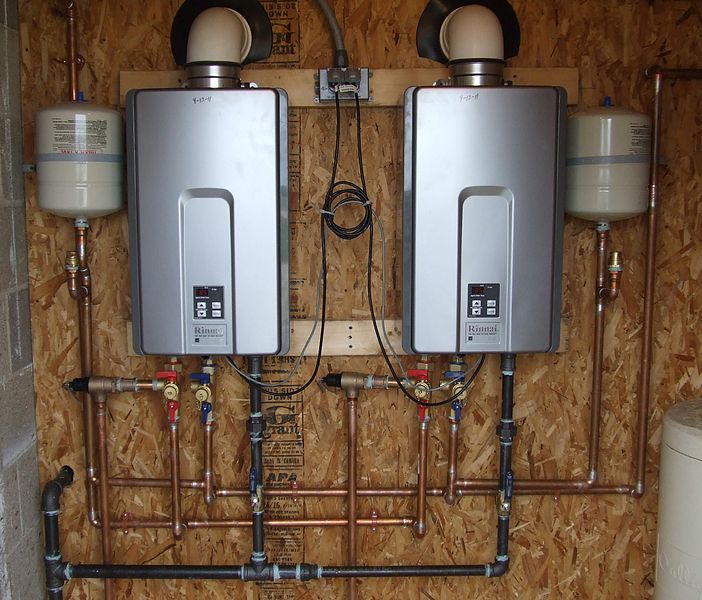
If you’re already replacing, the question of which type to install is worth taking seriously. Tankless units cost more upfront but deliver hot water on demand without standby heat loss. For a household of four or more in a Los Angeles home, a tankless unit rated at 9 to 11 GPM handles simultaneous showers, dishwasher use, and laundry without running cold.
The trade-off is real, though. A quality tankless gas unit from Navien or Rinnai runs $1,800 to $3,000 installed in Los Angeles, versus $900 to $1,400 for a new 50-gallon tank unit. The payback period on the efficiency savings alone is typically 7 to 12 years. If you plan to sell your home in three years, the financial case for going tankless is weaker than it looks.
There’s also the venting consideration. Switching from a tank to a tankless unit often requires new gas line upgrades and different venting, which adds $300 to $600 to the installation cost depending on your home’s existing setup. Getting that cost estimate before committing is essential, not an afterthought.
| Unit Type | Avg. Installed Cost (LA, 2026) | Lifespan | Best For | Weakness |
|---|---|---|---|---|
| 40-gal Gas Tank | $850 to $1,100 | 8 to 12 years | 1 to 3 people | Standby heat loss |
| 50-gal Gas Tank | $950 to $1,250 | 8 to 12 years | 3 to 5 people | Same as above |
| Electric Tank | $800 to $1,050 | 10 to 13 years | No gas line available | Higher op cost in CA |
| Gas Tankless | $1,800 to $3,000 | 15 to 20 years | High-demand households | Higher upfront cost |
| Heat Pump (Hybrid) | $1,500 to $2,500 | 12 to 15 years | Energy-focused buyers | Needs adequate space |
California’s Title 24 building standards and the state’s move toward electrification also push some homeowners toward heat pump water heaters (also called hybrid units). These use electricity but operate at two to three times the efficiency of a standard electric tank. If your home already has gas appliances and a gas water heater, the hybrid switch involves an electrical panel upgrade in some cases. Plan for that cost.
Signs That Skip the Repair Debate Entirely
Some conditions make the water heater repair vs replace decision immediate, no math required. If you observe any of the following, call a plumber rather than waiting:
- Rust-colored hot water coming from multiple faucets (not just one): the tank’s interior is corroding.
- Rumbling or popping sounds during heating cycles: heavy sediment buildup is overheating the bottom of the tank, and it’s accelerating corrosion.
- No hot water and the unit is over 10 years old: the risk of a second failure after repair is high enough that replacement is usually more cost-effective.
- Visible cracks in the tank body or burner assembly: not a repairable condition.
The pattern we see repeatedly with older units is a homeowner fixing the thermostat, then the heating element, then discovering a corroded tank bottom six months later. Each individual repair looked reasonable. The sequence was expensive. Evaluating the whole unit’s condition once, rather than addressing one part at a time, saves money and avoids repeated service calls.
For full details on the range of water heater and plumbing services available from Expertise Plumbing & Rooter, visit expertiseplumbing.com to learn more about the service area and scheduling options.

Frequently Asked Questions
Q: How do I know if my water heater is worth repairing or should be replaced?
Start with the unit’s age and the repair cost relative to a new installation.
If your tank-style water heater is older than 10 years and the repair estimate exceeds $500, replacement is almost always the better financial decision. A unit that has failed once in its final years is statistically likely to fail again within 12 to 18 months, meaning you pay twice for a result you could have achieved once.
Q: What is the average cost to replace a water heater in Los Angeles in 2026?
A standard 50-gallon gas tank water heater installed in Los Angeles runs approximately $950 to $1,250 as of 2026.
Tankless units cost more, ranging from $1,800 to $3,000 installed depending on venting and gas line requirements. Heat pump hybrid units fall in the $1,500 to $2,500 range. Always get at least two itemized quotes before committing, and confirm whether the estimate includes permit fees, which are required for water heater replacements in Los Angeles County.
Q: Can a leaking water heater be repaired, or does it always need to be replaced?
It depends entirely on where the leak is originating.
A leak from the pressure relief valve, supply line connections, or drain valve is a repair. Those are external components that a licensed plumber can replace at a reasonable cost. A leak at the bottom of the tank body means the inner lining has corroded through, and no repair addresses that. The tank must be replaced immediately to avoid water damage to the surrounding area.
Q: How long does a water heater replacement take in Los Angeles?
Most standard tank water heater replacements are completed within 2 to 4 hours by a licensed plumber.
Tankless installations take longer, typically 4 to 8 hours, especially when gas line upgrades or new venting runs are required. If a permit is pulled, the City of Los Angeles or your local jurisdiction may require an inspection before the unit is placed into service, which can add a day or two to the overall timeline. Scheduling that inspection early avoids unnecessary delays.
Q: Does California have any rebates available for replacing an old water heater with a more efficient model?
Yes. California utility providers and state programs offer rebates for qualifying high-efficiency water heater replacements in 2026.
Southern California Gas Company (SoCalGas) and Los Angeles Department of Water and Power (LADWP) both run rebate programs for Energy Star-certified water heaters and heat pump units. Rebate amounts vary by product type and income qualification, but they can reduce out-of-pocket replacement costs by $100 to $500 or more. Check the current program terms directly with your utility provider before purchasing, since rebate availability and amounts change throughout the year.
The Bottom Line on Water Heater Repair vs Replace
The water heater repair vs replace decision is rarely a close call once you have the right information in front of you. Unit age, repair cost as a percentage of replacement cost, current energy efficiency, and the type of failure all point in a clear direction when you evaluate them together rather than reacting to one symptom at a time.
If your unit is under 8 years old and the repair is straightforward, fix it. If the unit is over 10 years old, showing multiple symptoms, or needs a repair that costs more than half the price of a new installation, put that money toward a replacement that gives you a full decade of reliable service. The short-term savings of a deferred repair almost never outweigh the compounded cost of repeated service calls on an aging tank.
Expertise Plumbing & Rooter is available 24 hours a day to diagnose your water heater and give you a straight answer on which path makes sense for your home. Call (888) 807-7069 or visit the team at 8885 Roslyndale Ave, Arleta, CA 91331 to schedule a same-day evaluation.