
A water heater leaking from bottom of the tank is almost always a sign of internal corrosion, a faulty drain valve, or a failing pressure relief valve. Acting fast can mean the difference between a simple repair and a full tank replacement that costs $1,000 or more.
Key Takeaways
- A leak at the base of your water heater may come from the drain valve, the T&P relief valve discharge pipe, or a corroded tank interior.
- Sediment buildup is a leading cause of tank corrosion in Los Angeles, where hard water accelerates the process.
- Not every bottom leak means your tank is ruined. A loose drain valve is often a $10-$20 fix.
- Rust-colored water or a musty smell alongside a leak almost always signals internal tank failure.
- If water is pooling rapidly, shut off the water supply and power before doing anything else.
- Age matters: water heaters older than 10-12 years with a bottom leak are strong replacement candidates.
Why Water Heaters Leak at the Bottom
The bottom of a water heater is under more stress than most homeowners realize. Sediment from hard water settles there over time, water pressure fluctuates, and components like the drain valve sit right at floor level where leaks are easy to miss until a puddle forms.
There are four primary reasons you might find a water heater leaking from bottom of the unit:
1. A Faulty or Loose Drain Valve
The drain valve sits at the very base of your tank. It is used to flush sediment during annual maintenance. If it develops a hairline crack or was never fully tightened after the last flush, water will drip or stream steadily from that point. This is the most common and least serious cause of a bottom leak. You can check it by placing a dry paper towel directly against the valve stem for 60 seconds. If it comes away wet, the valve is the source.
2. Temperature and Pressure (T&P) Relief Valve Discharge Pipe
The T&P valve itself is located on the side of the tank, but its discharge pipe runs down to the bottom or near floor level. If the valve is releasing pressure, water exits through that pipe and pools at the base. This can look like a bottom leak when the actual source is mid-tank. A leaking T&P valve usually means pressure inside the tank is too high, the thermostat is set above 120°F, or the valve itself is defective.
3. Internal Tank Corrosion
This is the most serious cause. Every tank-style water heater has a sacrificial anode rod that slows corrosion. When that rod is fully depleted and ignored, rust attacks the steel lining. Once a pinhole forms in the tank itself, no repair is possible. Replacement is the only option. Los Angeles has particularly hard water, with mineral content that accelerates anode depletion faster than the national average.
4. Condensation
In cooler months or when a new tank is first filled with cold water, condensation can form on the outside of the tank and drip to the floor. This is harmless and typically disappears within a few hours once the water heats up. If moisture clears on its own, condensation was likely the culprit.
What to Do Immediately When You Spot a Leak
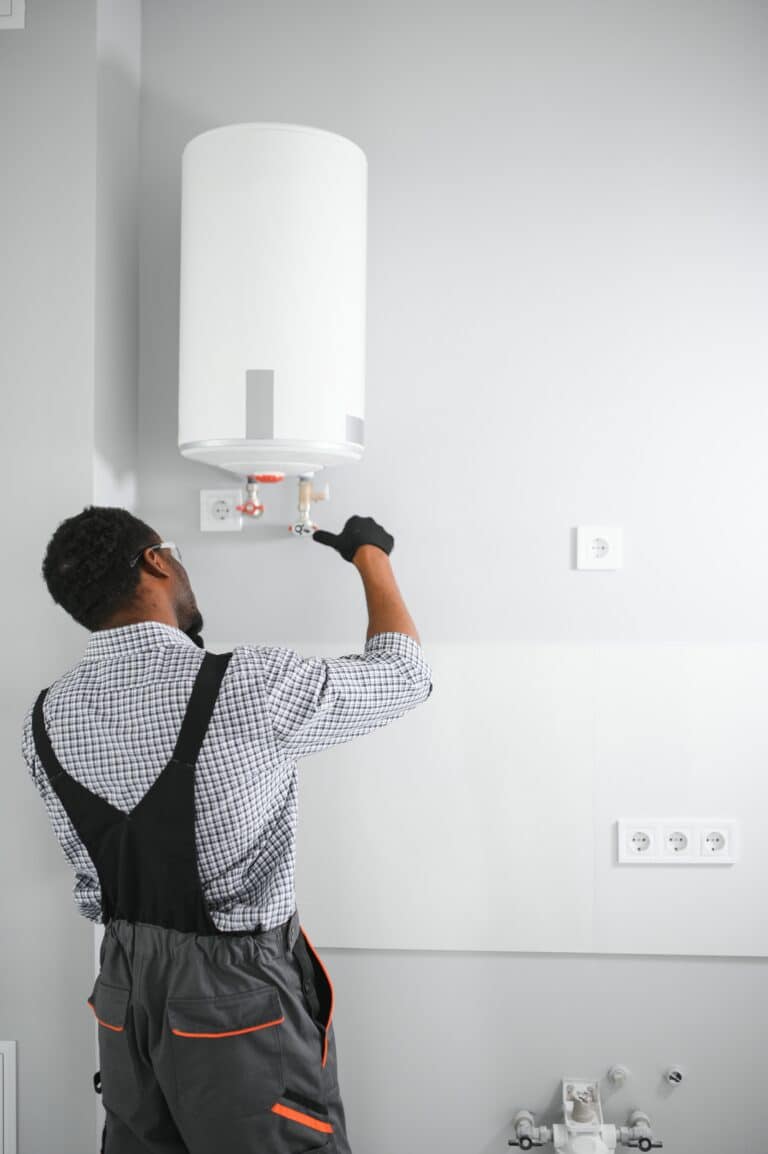
Speed matters when your water heater is leaking. Standing water can warp flooring, seep into drywall, and create mold within 24 to 48 hours. Follow these steps in order before calling a plumber or attempting any repairs:
Step 1: Turn Off the Power or Gas Supply
For electric water heaters, locate your breaker panel and switch the circuit labeled “water heater” to the off position. For gas units, find the gas supply line running to the heater and turn the shutoff valve perpendicular to the pipe. Never work around a leaking water heater with power or gas still active.
Step 2: Shut Off the Cold Water Supply
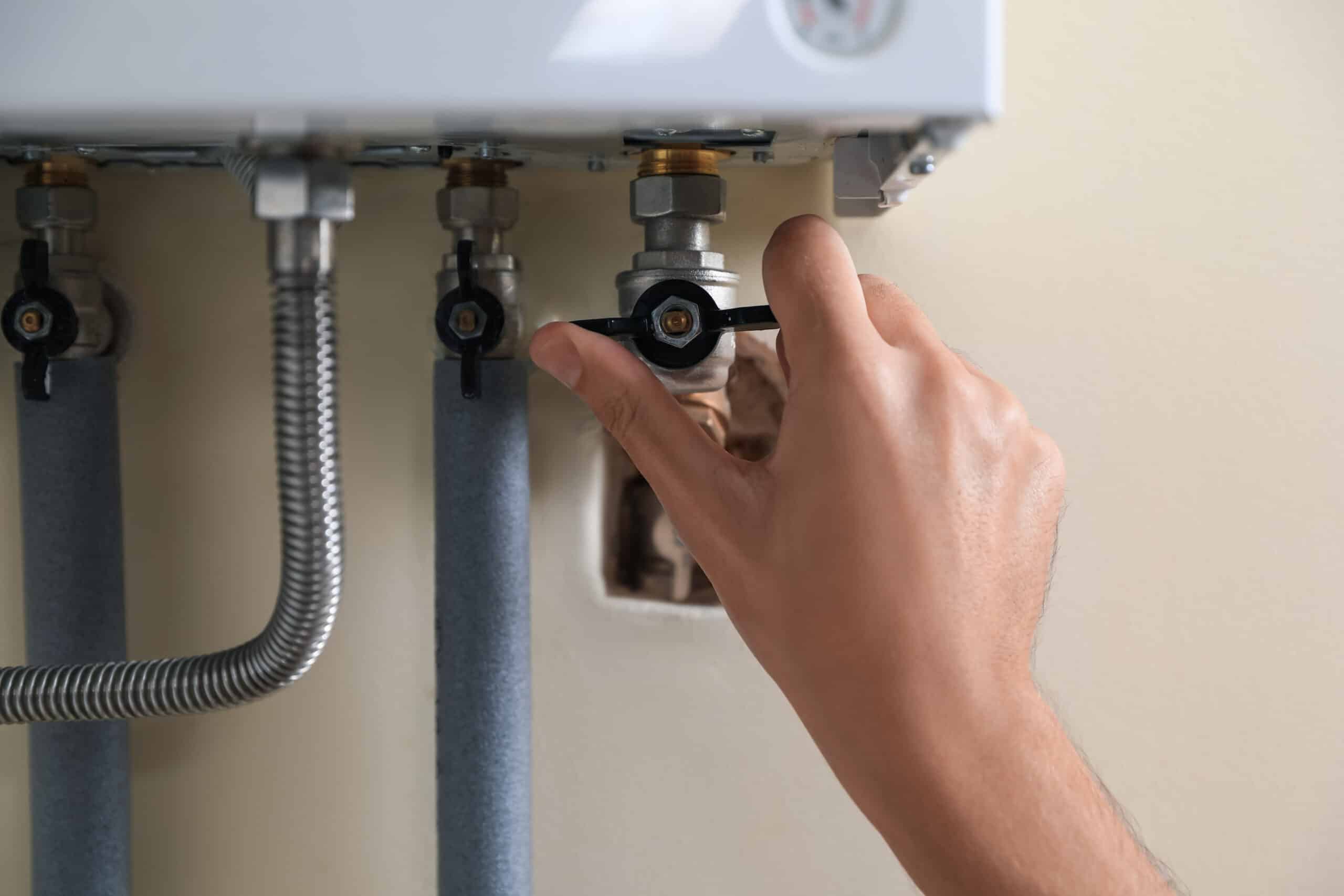
Every water heater has a dedicated cold water shutoff valve on the inlet pipe, usually located directly above the unit. Turn it clockwise until it stops. This prevents more water from entering the tank.
Step 3: Identify the Source
Dry the area around the base with old towels. Watch carefully for 3-5 minutes to see exactly where water appears. Check the drain valve, the T&P discharge pipe, any pipe fittings at the top (water can run down the exterior), and finally the tank seam at the base.
Step 4: Contain the Water
Place buckets or lay down absorbent towels while you assess the situation. If the leak is serious, attach a garden hose to the drain valve and run it to a floor drain or outside. Open a hot water faucet anywhere in the house to break the vacuum and allow the tank to drain faster.
Step 5: Call a Licensed Plumber
If the leak is coming from the tank body itself, or if you cannot identify the source, contact a licensed professional. Attempting to patch a corroded tank is a temporary fix that almost always fails within days.
If you are dealing with a sudden, heavy leak in the San Fernando Valley area, an emergency plumber los angeles from Expertise Plumbing and Rooter can respond quickly to prevent water damage from escalating.
Drain Valve vs. Tank Failure: How to Tell the Difference
Knowing which problem you have saves you time and money. Here is a direct comparison:
| Sign | Drain Valve Issue | Internal Tank Failure |
|---|---|---|
| Water source | Drip from valve stem or cap | Seepage from tank seam or base weld |
| Water color | Clear | Rusty or brown |
| Smell | None | Metallic or sulfur-like |
| Tank age | Any age | Usually 10+ years |
| Rate of leak | Slow drip | Steady flow or pooling |
| Repair possible? | Yes, valve replacement ($15-$40) | No, full replacement needed |
| Urgency | Moderate | High |
A drain valve replacement is a straightforward job. A plumber can swap out a faulty valve in under an hour for a modest labor cost. Internal tank failure, on the other hand, requires a full water heater installation los angeles service. If you are in the Los Angeles area, Expertise Plumbing and Rooter handles water heater replacement with 29 years of experience behind every job, all under CSLB License #1104324.
Things to Know
- A small drip from the drain valve can waste more than 30 gallons per day if ignored.
- California law (Title 24) requires water heater strapping in seismic zones, which includes all of Los Angeles County. Verify your unit is properly strapped before any service work.
- Turning up your thermostat above 120°F to “get more hot water” is a common mistake that accelerates T&P valve wear and increases the risk of scalding.
- If your tank is in a closet or tight space, water damage can be hidden inside walls for weeks before becoming visible.
- Manufacturer warranties on water heaters typically range from 6 to 12 years. Check your paperwork before assuming a repair bill is unavoidable.
- Expertise Plumbing and Rooter offers bilingual service in English and Spanish through master plumber Carlos Aguilar, making communication easier for Spanish-speaking households.

Ready to Stop the Leak Before It Gets Worse?
Call Expertise Plumbing and Rooter at (888) 807-7069 right now. JC Garcia and his team have been handling water heater emergencies across the San Fernando Valley since 1997, and every job is backed by CSLB License #1104324. Whether you need a drain valve swap, a full tank replacement, or a Rinnai tankless upgrade, the team can assess your situation same-day and give you a clear, honest recommendation. Do not wait for a small drip to become a flooded utility room.
Contact Us!
888-807-7069

How Sediment Buildup Causes Bottom Leaks (and How to Prevent It)
Sediment is the silent villain behind most tank-style water heater failures. In the Los Angeles area, the municipal water supply carries significant mineral content, primarily calcium and magnesium. Over time, these minerals settle at the bottom of the tank, creating a crusty layer that:
- Traps heat between the burner and the water, causing overheating
- Accelerates corrosion of the tank interior
- Forces the anode rod to work harder until it is fully consumed
- Causes popping or rumbling sounds during heating cycles
The standard recommendation is to flush your tank once per year. If your home has hard water and you have never flushed the tank, you may find that opening the drain valve releases very little water initially because sediment is blocking the outlet.
Sediment buildup can also affect your home’s wider plumbing. In severe cases, mineral deposits accumulate in drain lines and sewer connections. Services like hydro jetting los angeles from Expertise Plumbing and Rooter can clear those lines thoroughly, restoring full flow and reducing backpressure on aging fixtures.
Routine drain cleaning service los angeles also helps maintain the overall plumbing system health that directly supports your water heater’s performance.
Frequently Asked Questions
Q: Is a water heater leaking from the bottom always an emergency?
Not always, but it requires immediate attention regardless of severity.
If the source is a loose drain valve and the drip is minor, you have time to diagnose and schedule a repair. However, if water is pooling quickly or the tank seam is wet, treat it as an emergency, shut off water and power, and call a plumber the same day.
Q: Can I fix a leaking water heater drain valve myself?
Yes, replacing a drain valve is a manageable DIY task if you are comfortable working with plumbing.
You will need to partially drain the tank first, then unscrew the old valve and thread in a replacement. Replacement valves cost around $10 to $20 at hardware stores. If the valve threads are damaged or the tank shows corrosion nearby, stop and call a professional.
Q: How long does a water heater last before leaking from the bottom becomes likely?
Most tank water heaters show significant wear between 10 and 15 years, and bottom leaks become more common after the 10-year mark.
Factors that shorten that lifespan include hard water, infrequent flushing, and a depleted anode rod. Annual maintenance extends tank life considerably.
Q: What does it mean if the water leaking from the bottom is brown or rust-colored?
Rust-colored water signals internal tank corrosion, which cannot be repaired.
Once the steel lining has corroded through, water contacts bare metal continuously, degrading water quality and accelerating structural failure. A tank producing rust-colored water at the drain needs immediate replacement.
Q: How much does it cost to replace a water heater in Los Angeles?
Expect to pay between $900 and $1,800 total for a standard tank replacement in Los Angeles, including parts and labor.
Tankless units run higher upfront, typically $2,000 to $3,500 installed, but reduce energy bills by 20-30% annually. Costs vary based on unit size, fuel type, and permit requirements. Always get an itemized quote from a licensed contractor before committing.
Repair or Replace? Making the Right Call
The decision to repair or replace depends on three factors: the source of the leak, the age of the unit, and the cost comparison.
Repair makes sense when:
- The drain valve is leaking and the tank is under 8 years old
- The T&P valve is draining due to a high-pressure setting that can be adjusted
- The unit is still under manufacturer warranty
Replacement is the better choice when:
- The tank itself is leaking at the base or seams
- The unit is 10 years old or older
- Repair costs exceed 50% of a new unit’s price
- You have had multiple repairs within the past 2 years
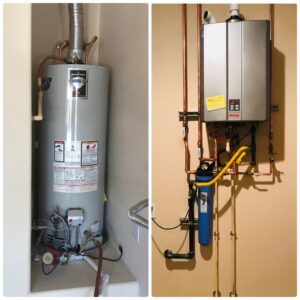
New tank-style water heaters range from $300 to $900 for the unit itself, with installation typically adding $300 to $600 depending on complexity. Tankless units cost more upfront but deliver long-term energy savings. Expertise Plumbing and Rooter is an authorized Rinnai Pro Partner, meaning the team is factory-trained to install Rinnai tankless systems, which are among the most efficient options available for Los Angeles homeowners.
For homes dealing with older sewer infrastructure alongside a failing water heater, it may also be worth exploring trenchless sewer repair los angeles to address root intrusion or pipe deterioration that affects drainage from your utility area.
The Bottom Line on Water Heater Leaking From Bottom
A water heater leaking from bottom of the tank is a problem that never improves on its own. The source dictates your urgency: a faulty valve buys you time, a corroded tank does not. Identify the source, shut off water and power, and make a repair-or-replace decision based on the age and condition of your unit.
If you are in Los Angeles or the San Fernando Valley, Expertise Plumbing and Rooter is reachable at (888) 807-7069, with nearly three decades of experience and full licensing, bonding, and insurance to back every job. Get the leak diagnosed today and protect your home from water damage before it compounds.