
Garbage Disposal Not Working? Causes and Fixes by Symptom
Most garbage disposals that stop working have one of three problems: a jam, a tripped reset button, or a lost power connection. Which one you have depends on what the disposal does when you flip the switch. This guide walks through each symptom, the fix, and when it’s time to replace the unit or call a plumber.
Expertise Plumbing & Rooter is led by JC Garcia, a licensed master plumber with 29 years of experience, and operates under CSLB #1104324 as a licensed, insured, and bonded C-36 plumbing contractor.
Call Us
888-807-7069
Have a Any Project With Us?
Get 30% Off! Claim Now!👈
Get Your Free Estimate
Fix 1: Garbage Disposal Humming but Not Spinning
A hum with no spinning means the motor has power but the blades are stuck, usually from a hard object or packed food.
- Turn off the switch and unplug the unit or turn off its breaker.
- Look inside with a flashlight and remove any visible object with tongs or pliers.
- Find the hex socket in the center of the bottom of the disposal. Insert the hex wrench that came with the unit (often 1/4 inch).
- Work the wrench back and forth until the blades turn freely.
- Press the red reset button on the bottom of the unit.
- Restore power, run cold water, and test.
Fix 2: Garbage Disposal Not Turning On
If the disposal is silent, check in this order:
- Press the reset button. It’s a small red button on the bottom of the unit. It pops out when the motor overheats or overloads. Wait a few minutes for it to cool, then press it.
- Check the outlet. Under the sink, see if the plug is seated. If the outlet has a GFCI, press its reset button.
- Check the breaker. Reset any tripped breaker for the kitchen.
- Test the wall switch. A bad switch can be the cause.
- Inspect the wiring. Loose connections inside the unit need a professional.
If the reset trips again right away, don’t keep pressing it. That points to a jam, a failing motor, or an electrical problem.
Find Your Symptom
| What the disposal does | Likely cause | Go to |
|---|---|---|
| Hums but doesn’t spin | Jammed | Fix 1 |
| Dead, no hum, no sound | Tripped reset or no power | Fix 2 |
| Leaks water | Loose connection or failed seal | Fix 3 |
| Runs but sink drains slowly | Clogged drain line | Fix 4 |
| Smells bad | Buildup | Fix 5 |
| Trips the reset again and again | Overload or motor failing | Replace |
Why Your Garbage Disposal Keeps Getting Jammed
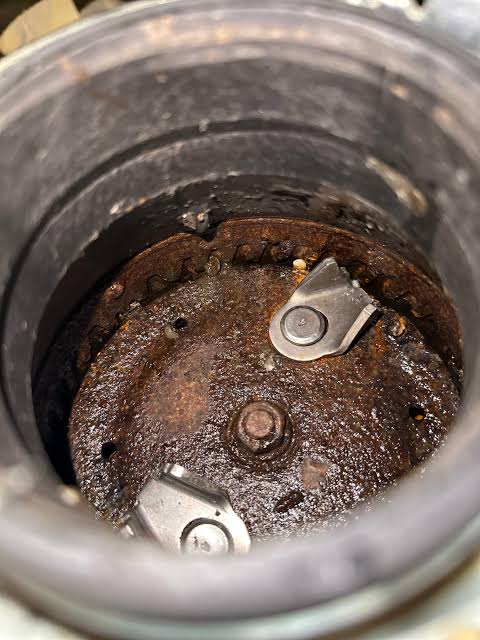
Understanding what actually triggers a jam saves you from repeating the same mistakes. A jam occurs when the impeller plate, the spinning disc inside the unit, becomes locked in place. The motor strains against the blockage, trips an internal thermal overload switch, and the unit shuts itself off automatically.
The most common garbage disposal jam causes fixes start with identifying what went in. Here is a breakdown of the top culprits:
| Cause | Why It Jams | Frequency |
|---|---|---|
| Bones or fruit pits | Too dense for residential grinders | Very common |
| Fibrous vegetables (celery, artichokes) | Fibers wrap around the impeller | Common |
| Grease and fat buildup | Solidifies and narrows the chamber | Common |
| Silverware or bottle caps | Hard foreign objects lock the plate | Occasional |
| Potato peels in bulk | Starchy paste clogs the drain | Common |
| Eggshells | Membrane wraps around moving parts | Occasional |
Running dry (without water) is another leading cause, and water acts as a lubricant and helps flush ground material through the drain line when you use an emergency plumber los angeles service or handle it yourself. Skipping this step puts extra friction on the impeller and increases the chance of a blockage forming.
Step-by-Step Fixes You Can Do Right Now
Before you call anyone, try these steps in order. They resolve the vast majority of jams without any special training.
Step 1: Turn Off the Power
Switch the disposal off at the wall. If the unit is hardwired, go to your breaker panel and flip the circuit. This is non-negotiable. Never reach inside a disposal that has any power connected to it.
Step 2: Use the Hex Wrench Method
Most disposals have a hex (Allen wrench) socket on the bottom of the unit, directly under the sink, and using the proper faucet repair los angeles techniques can help you understand proper tool use. A standard 1/4-inch hex wrench fits most models, including InSinkErator and Moen units. Insert the wrench into the socket and work it back and forth in both directions. You are manually rotating the impeller to break the jam loose. You should feel resistance followed by a release once the object clears.
Step 3: Check Inside With a Flashlight
After loosening the jam, shine a flashlight into the disposal from above. Look for the object that caused the blockage. Use kitchen tongs or needle-nose pliers to remove it. Do not use your fingers, even with the power off.
Step 4: Press the Reset Button
The thermal overload switch trips during a jam. Once you have cleared the blockage, press the small red reset button on the bottom of the unit. It should click in firmly. If it immediately pops back out, there is still a problem.
Step 5: Test With Water First
Turn the cold water on, then switch the disposal back on. Let it run for 20 to 30 seconds before you put anything into it. Cold water keeps fats and oils in solid form so they flush out cleanly rather than coating the grinding chamber.
Things to Know
- Warm or hot water should never be used while the disposal is running. Heat melts fats into liquid, which then re-solidifies further down the drain line
- The humming sound without any spinning tells you the motor is getting power but the plate is stuck. This is a mechanical jam, not an electrical failure
- Using the hex wrench too aggressively can strip the socket. Apply steady pressure rather than force
- Chemical drain cleaners are not safe to use in garbage disposals. They corrode the rubber seals and metal components over time
- Disposal units typically last 10 to 15 years. Frequent jams in an older unit often mean it is close to the end of its service life
When the Problem Goes Beyond a Simple Jam
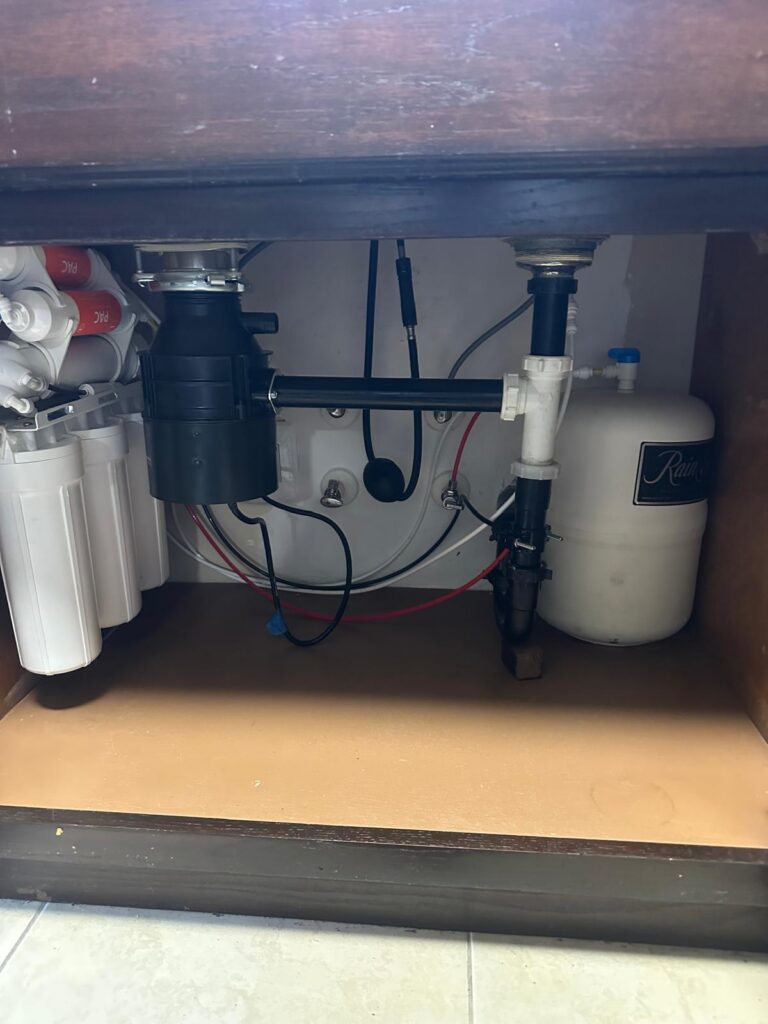
Some situations require more than a hex wrench. If the reset button keeps tripping within minutes of operation, the motor may be overheating due to worn bearings or a compromised seal. If you notice water pooling under the sink after a jam, the disposal flange or mounting ring may have shifted, and reaching out to a kitchen plumbing los angeles specialist is the practical next step.
Leaks that develop around the unit after repeated jams are worth taking seriously. A stressed unit can crack the body housing or loosen the mounting, leading to water damage under the cabinet, and for ongoing issues like this, water leak repair los angeles professionals can identify whether the source is the disposal, the drain connection, or an unrelated supply line.
Businesses running commercial kitchen operations have additional concerns, and commercial plumbing los angeles contractors are equipped to handle the scale and compliance requirements involved, including grease traps, high-volume grinding, and commercial-grade units that all require different maintenance protocols.
If a jam is accompanied by a dripping faucet or poor water pressure at the sink, it may be worth having both checked at the same time. A technician handling faucet repair los angeles can inspect the entire sink area while they are already on site, saving you time and a second service call.
Ready to Stop Dealing With Recurring Jams?
The single most effective thing you can do right now is run cold water for a full 30 seconds before and after every use. Set a habit of checking what goes into the sink before it goes into the disposal. If your unit has already jammed three or more times this month, contact an emergency plumber los angeles to have it professionally inspected before the motor burns out completely.
Frequently Asked Questions
Q: Why does my garbage disposal hum but not spin?
The humming sound means the motor is receiving power but the impeller plate is locked in place by a jam.
Use the hex wrench on the bottom socket to manually free the plate, then press the reset button. If the unit still hums after clearing the jam, the motor windings may be damaged.
Q: Is it safe to reach into the disposal to remove a jam?
No, you should never put your hand inside the disposal, even when it appears to be off.
The switch can be accidentally bumped, and older units can start unexpectedly. Always use tongs or pliers and confirm the circuit breaker is off before any hand clearance.
Q: How often should a garbage disposal be professionally serviced?
A residential disposal generally does not need annual servicing unless it shows repeated jams, unusual noises, or leaks.
Commercial kitchens are a different situation and typically require quarterly inspections. Residential units benefit from a professional check every two to three years once they pass the five-year mark.
Q: Can I use ice to clean the disposal and prevent jams?
Q: Can I use ice to clean the disposal and prevent jams?
Yes, running a cup of ice cubes through the disposal periodically helps knock debris off the impeller and sharpen the grinding components.
Follow the ice with cold water and a few lemon peels to address odor. This takes about two minutes and genuinely reduces buildup that leads to jams.
If you have a specific commercial plumbing need not listed here, please call us to discuss your requirements.
Q: What foods are safe to put down a garbage disposal?
Soft food scraps like cooked vegetables, small fruit pieces, and most cooked meats are generally safe.
Avoid fibrous vegetables, starchy peels, large bones, grease, coffee grounds in bulk, and any non-food items. When in doubt, put it in the trash instead.
The Bottom Line on Best Plumber Northridge CA
The vast majority of garbage disposal jam causes fixes come down to two things: knowing what not to put in the unit and acting quickly when a jam occurs. The hex wrench method and reset button clear most blockages in minutes. Persistent problems, leaks, or electrical issues are signals that professional help is the smarter investment compared to repeated DIY attempts on a failing unit.
Start with cold water every time you run the disposal, keep the forbidden food list posted near your sink, and address any jam the same day it happens to protect the motor from sustained strain.