
A leaky faucet can waste up to 20 gallons of water per day. This can really up your water bill and harm the environment. Fixing these leaks is good for both your wallet and the planet.
We’ll show you easy DIY ways to fix common faucet issues. You’ll learn how to save water and money. Our guide covers different faucet types, so you can fix the problem with confidence.
If DIY repairs aren’t your thing or if the problem doesn’t go away, we’ve got you covered. Our team is ready to help with faucet repairs. Call us at 888-807-7069 or check out our Facebook page and Google Business Profile for more info.
Key Takeaways
- Simple DIY steps can fix most faucet leaks.
- Fixing a leaky faucet can save up to 20 gallons of water daily.
- Our professional team is available for complex repairs.
- Regular maintenance can prevent future leaks.
- Contact us for expert faucet repair services.
Understanding Common Faucet Problems
A leaky faucet is more than a simple annoyance; it signals deeper issues that need fixing. Leaks can raise your water bills and harm nearby areas if not fixed quickly. We’ll look at the different leaks and why faucets often have problems.
Identifying Different Types of Leaks
Leaks can show up in many ways, like dripping faucets, leaking handles, or water spraying from the base. Knowing the leak type is key for fixing it right. For example, a dripping faucet usually means worn-out parts, while a leaking handle might point to a faulty cartridge or valve.
To figure out the problem, turn on the faucet and watch the leak. If it drips steadily, the issue is likely with the faucet’s seals. If the leak gets worse when you turn the handle, it might be a handle problem.
Why Faucets Develop Problems Over Time
Faucets face wear and tear over time. Mineral buildup, corrosion, and damage can cause them to malfunction. Regular use wears down parts like washers and O-rings, leading to leaks.
Experts say, “Regular maintenance is crucial for your faucet’s longevity.” Ignoring maintenance can lead to bigger problems, costing you more for repairs.
| Cause | Effect | Solution |
|---|---|---|
| Mineral Buildup | Clogged aerators, reduced water flow | Clean or replace aerators |
| Worn-out Washers/O-rings | Dripping faucets | Replace washers/O-rings |
| Corrosion | Leaks, faucet failure | Replace corroded parts or faucet |
Knowing common faucet problems helps homeowners prevent leaks and keep their faucets working well.
Essential Tools for DIY Faucet Repair
To fix faucet leaks and drips, you need the right tools. DIY faucet repair is easier if you’re prepared.
Basic Tools Every Homeowner Should Have
Start by gathering basic tools like an adjustable wrench, channel-type pliers, and a screwdriver. These will cover most faucet repairs.
Basic Tool List:
- Adjustable wrench
- Channel-type pliers
- Screwdriver
- Needle-nose pliers
- Teflon tape
Specialized Tools for Specific Faucet Types
Some faucets need special tools. For example, cartridge faucets need a cartridge puller. Ceramic disk faucets require a specific wrench.
| Faucet Type | Specialized Tool |
|---|---|
| Cartridge Faucet | Cartridge puller |
| Ceramic Disk Faucet | Specialized wrench |
Types of Faucets and Their Repair Challenges
Knowing the different faucet types is key to fixing them right. Each faucet design has its own repair hurdles. We’ll look at the features of various faucets and the common problems they face.
Compression Faucets
Compression faucets are very common. They use rubber washers to manage water flow. Over time, these washers can wear out, leading to leaks. To fix them, you often need to replace the worn-out washers or O-rings. Regular upkeep can help these faucets last longer.
Ball-Type Faucets
Ball-type faucets use a rotating ball to control water temperature and flow. Issues often come from worn-out seals or springs. Fixing these faucets means adjusting or replacing the ball assembly and seals. Be gentle with the ball to avoid making things worse.
Cartridge Faucets
Cartridge faucets use a cartridge to manage water flow. Problems usually come from mineral buildup or worn-out cartridges. Replacing the cartridge often fixes leaks. Cleaning the cartridge can sometimes solve the problem without needing a new one.
Ceramic Disk Faucets
Ceramic disk faucets are durable and use ceramic disks to control water flow. Yet, they can still leak due to mineral deposits or damaged disks. Fixing them might mean cleaning the disks or replacing the disk assembly. Regular cleaning can prevent mineral buildup.
As shown in the table below, each faucet type has its unique characteristics and repair challenges.
| Faucet Type | Common Issues | Repair Tips |
|---|---|---|
| Compression | Worn-out washers | Replace washers or O-rings |
| Ball-Type | Worn-out seals or springs | Adjust or replace ball assembly |
| Cartridge | Mineral buildup or worn-out cartridges | Clean or replace cartridge |
| Ceramic Disk | Mineral deposits or damaged disks | Clean disks or replace disk assembly |
A plumbing expert once said, “Knowing your faucet’s mechanism is key to successful repair.” By figuring out your faucet’s type and its specific issues, you can fix it better.
Step-by-Step Guide to Fix a Dripping Compression Faucet
Fixing a dripping compression faucet is easy if you have the right tools. These faucets are common and reliable but can leak over time. Luckily, fixing them is simple.
Shutting Off Water Supply Safely
First, turn off the water supply to the faucet. Find the shut-off valves under the sink and turn them clockwise. Then, open the faucet to drain the water from the pipes.
Disassembling the Faucet Handle
To get to the worn-out parts, you need to take apart the faucet handle. Remove the handle cap or index, marked with a hot or cold indicator. Use a screwdriver to remove the screw, then pull the handle off gently.
Replacing Worn Washers and O-rings
The main reason for a leak is a worn-out washer or O-ring. Check them for wear. Replace them with new ones, applying a bit of plumber’s grease for a tight seal.
Reassembling and Testing
After putting in the new parts, put the faucet handle back together in reverse order. Turn on the water supply and test the faucet. Make sure the leak is fixed.
| Step | Description |
|---|---|
| 1 | Shut off water supply |
| 2 | Disassemble faucet handle |
| 3 | Replace worn washers and O-rings |
| 4 | Reassemble and test |
Repairing Ball-Type Faucets
If your ball-type faucet is leaking, don’t worry. We have a simple guide to help you fix it. These faucets have a single handle and are found in many homes. But, they can leak over time.
Common Issues with Ball Faucets
Ball-type faucets can have several problems. Leaks from the handle or base and trouble with water temperature are common. The most frequent issue is a leak around the handle. This is usually due to worn-out O-rings or a damaged seal.
To solve this, you need to disassemble the handle and check these parts.
- Check for worn-out O-rings or seals.
- Inspect the ball assembly for any signs of wear.
- Look for mineral buildup that might be causing the leak.
Replacing the Ball Assembly
Replacing the ball assembly is easy. First, shut off the water supply to the faucet. Then, take apart the faucet handle to get to the ball assembly. After removing it, look for any worn-out parts and replace them if needed.
- Remove the handle and any retaining rings.
- Pull out the old ball assembly.
- Install a new ball assembly, ensuring it’s properly seated.
Fixing Leaks Around the Base
Leaks at the faucet base are often because of a bad gasket or wrong installation. To fix it, you’ll need to remove the faucet and check the gasket. If it’s old, swap it for a new one. Make sure all connections are tight to avoid leaks later.
By following these steps, you should be able to fix your ball-type faucet. Always remember to turn off the water supply before starting any repairs.
Complete Faucet Repair Guide for Cartridge Models
Learning to fix a cartridge faucet can save you money on water and plumbing. These faucets are easy to use and simple to repair.
Identifying Cartridge Problems
The first step is to find out what’s wrong with your faucet. Look for leaks, drips, or trouble turning the handle. Turn the faucet on and off to check for leaks at the handle and base.
Common signs of cartridge problems:
- Leaking or dripping from the faucet
- Stiffness or looseness in the handle
- Water temperature issues
Removing and Replacing Cartridges
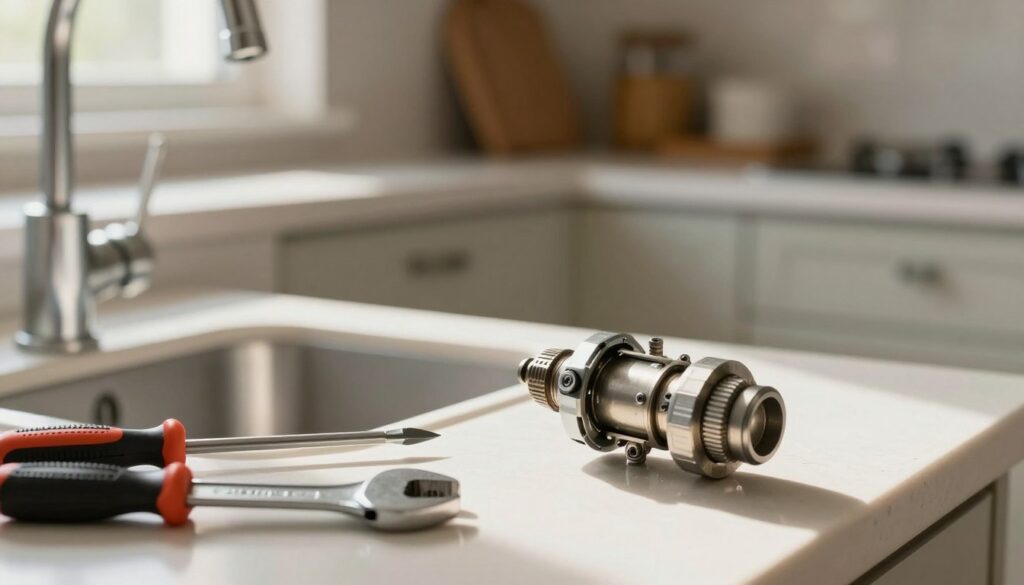
To fix your faucet, you might need to replace the cartridge. First, turn off the water supply. Then, take apart the faucet handle to get to the cartridge. You might need a cartridge removal tool.
| Step | Description |
|---|---|
| 1 | Shut off the water supply |
| 2 | Disassemble the faucet handle |
| 3 | Remove the old cartridge |
| 4 | Install a new cartridge |
| 5 | Reassemble the faucet |
Addressing Handle Issues
But sometimes, the problem is with the handle, not the cartridge. If it’s loose or stiff, you might need to adjust or replace it. This includes the O-rings or screws.
Tips for handle maintenance:
- Regularly clean the handle and surrounding area
- Lubricate moving parts as needed
- Check for worn-out parts and replace them
Ceramic Disk Faucet Troubleshooting
Understanding a ceramic disk faucet’s parts is key to fixing it. These faucets are durable but can still face problems. Knowing where to look can help solve these issues.
Signs of Ceramic Disk Problems
A leak or drip is a common sign of trouble. It often means the ceramic disks are worn or damaged. Stiffness or hard handle operation can also point to mineral buildup or debris.
Cleaning Mineral Deposits
Mineral buildup is a big problem in ceramic disk faucets, especially in hard water areas. Soaking parts in vinegar and water can help. For tough buildup, a soft brush might be needed.
| Cleaning Method | Effectiveness | Recommended For |
|---|---|---|
| Vinegar Soak | High | Mineral Deposits |
| Soft Brush Scrub | Medium | Stubborn Deposits |
Replacing the Ceramic Disk Assembly
Replacing the ceramic disk assembly might be needed if cleaning doesn’t work. First, turn off the water supply. Then, take apart the faucet to get to the disk. Replace the old parts with new ones, following the manufacturer’s guide.
By following these steps, you can keep your ceramic disk faucet working well. It ensures it continues to function smoothly.
Fixing Low Water Pressure Issues
Low water pressure can be a real hassle. But, there are ways to tackle it. It might be due to clogged aerators, mineral buildup, or problems with the water supply lines.
Cleaning Aerators and Screens
Cleaning your faucet’s aerators and screens can make a big difference. These parts can get clogged with minerals and debris over time. This reduces water flow.
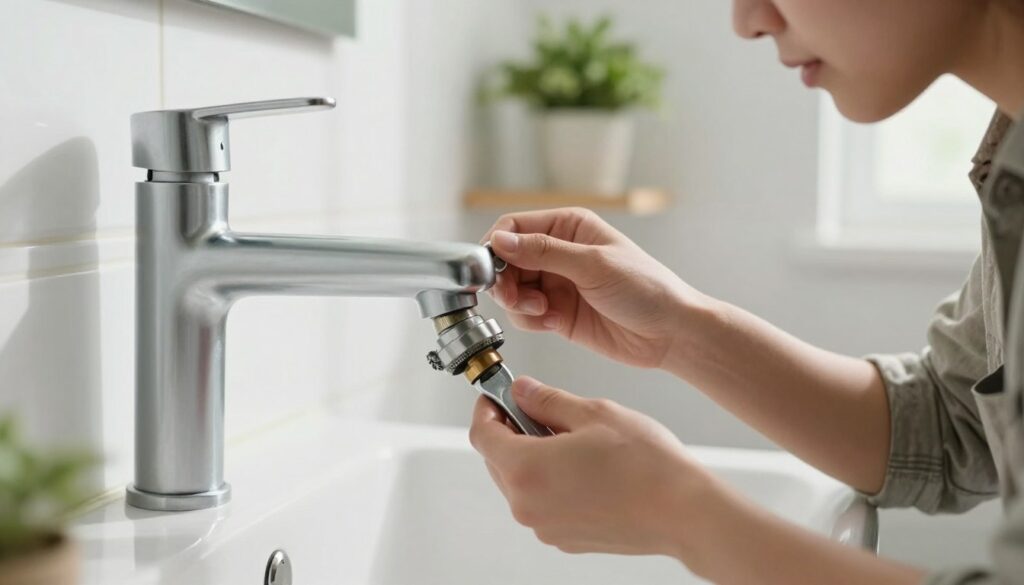
To clean them, remove the aerator from your faucet. Soak it in vinegar and water to break down mineral buildup. Then, use a small brush to scrub off any remaining debris. Make sure to rinse it well before putting it back.
Addressing Clogged Water Lines
If cleaning the aerators doesn’t help, the problem might be with your water lines. Clogged or corroded pipes can really cut down on water pressure. Look for any damage or mineral buildup on the pipes under your sink.
If you find a clogged line, a plumbing snake might be needed to clear it. Or, you might have to replace the pipes. For more serious problems, it’s best to call a professional plumber.
By fixing these common causes, you can get your faucet working right again. Regular maintenance, like cleaning aerators and checking pipes, can also prevent future problems.
Repair vs. Replacement: When to Upgrade Your Faucet
Faucet problems can make you think about fixing or replacing it. The choice depends on the issue, faucet age, and part costs.
It’s key to think it over before deciding. Frequent repairs might mean it’s time for a new faucet. But, if the problem is small and easy to fix, repair could be the best choice.
Signs That Repair Isn’t Cost-Effective
If your faucet is old or needs repairs often, replacing it might save money. Here are signs you should replace it:
- Frequent leaks or drips despite multiple repairs
- Increased water bills due to continuous leaks
- Outdated faucet design or functionality
| Aspect | Repair | Replacement |
|---|---|---|
| Cost | Lower upfront cost | Higher upfront cost |
| Long-term Savings | Potential for future repairs | Reduced likelihood of future issues |
| Water Efficiency | May not improve efficiency | Often improves water efficiency |
Choosing a New Faucet That Lasts
When you decide to replace your faucet, pick a quality one. Think about durability, water efficiency, and style.
Look for faucets with ceramic disks or other durable materials. Also, consider ones with advanced features like touchless operation or water-saving tech.
When to Call Our Professional Faucet Repair Services
Some faucet problems are too hard to fix by yourself. That’s when our professional faucet repair services are a big help. DIY fixes can save money, but sometimes, a pro plumber is needed for a good fix.
Complex Plumbing Issues Beyond DIY
Some faucet problems are too complex for DIY fixes. For example, issues with the faucet’s internal parts, like a faulty cartridge or a damaged valve seat, need special tools and skills. Also, if you can’t find or fix a leak, it might be a sign of a bigger problem. Trying to fix it yourself could cause more damage or safety risks.
Benefits of Our Expert Plumbing Services
Our professional faucet repair services have many benefits. We offer quick and effective solutions to your plumbing problems. Our skilled plumbers have the right tools and knowledge to fix issues fast, saving you time and preventing more damage. Choosing us means you get a reliable and lasting fix, guaranteed.
Don’t wait to call us for professional faucet repair services. You can reach us at 888-807-7069 to book an appointment or ask about our services. We’re ready to help with all your plumbing needs.
Find Us on Facebook and Google
Keep up with us on social media. Find us on Facebook at https://www.facebook.com/ExpertisePlumbing/ and on Google at https://share.google/PXhJ5USM69Vnx596M to learn more about our services and see what our happy customers say.
Conclusion: Maintaining Your Faucets for Longevity
Keeping your faucets in good shape is key to making them last longer and avoiding leaks. Simple DIY fixes can save you from expensive repairs later on.
Check your faucets often for worn-out parts like O-rings and washers. Replace them when you find them. Also, clean out mineral buildup in the aerator and screens to keep water pressure high.
Using the DIY tips from this article is a great start to a leak-free plumbing system. A well-kept faucet saves water and makes your kitchen or bathroom work better.
If you face a tough plumbing problem or aren’t sure how to fix a leaky faucet, contact our professional plumbing services. We’re ready to help with all your faucet needs.