
Kitchen faucet replacement cost typically falls between $150 and $1,000 or more, with most homeowners in the U.S. spending between $250 and $500 when you factor in both parts and professional labor. The wide range reflects real differences in faucet quality, installation complexity, and regional labor rates, not vague estimation.
Your specific number depends on three concrete variables: the faucet model you choose, how accessible your under-sink plumbing is, and whether any corroded supply lines or shut-off valves need replacing at the same time. Most people underestimate that last part.
Who this is for: This article is written for homeowners and renters (with landlord approval) who are actively planning a kitchen faucet swap and want to know what a fair price looks like before calling a plumber. Not for: DIYers exclusively looking for a step-by-step installation walkthrough, or anyone replacing a bathroom faucet, which carries different labor considerations.
What Drives the Price of a New Kitchen Faucet
The faucet itself is only half the equation. Labor accounts for a meaningful share of the total, especially if your existing setup has corroded fittings or non-standard supply connections.
The faucet unit: Entry-level faucets from brands like Moen (the Adler series, around $50 to $80) or Delta (the Foundations line, starting near $60) are functional and widely available at Home Depot and Lowe’s. Mid-range models from Kohler, Pfister, or American Standard run $100 to $300. High-end touchless or smart faucets from brands like Brizo or Delta Trinsic Pro can run $400 to $700 before installation. If you go custom or commercial-grade for a residential kitchen, $1,000 for the unit alone is realistic.
Labor: A licensed plumber in most U.S. metropolitan areas charges $45 to $200 per hour. A straightforward swap on an accessible sink typically takes one to two hours. That puts base labor at $90 to $400. In high-cost cities like Los Angeles, San Francisco, or New York, the upper end of that range is common. In rural areas of the Midwest, the lower end applies.
Additional work that adds cost:
- Replacing corroded shut-off valves: $75 to $150 per valve
- Swapping out old supply lines: $20 to $60 in parts, minimal extra labor time
- Cutting into cabinetry to improve access: $50 to $150 added to the job
- Installing a new soap dispenser or sprayer alongside the faucet: $30 to $100 in parts
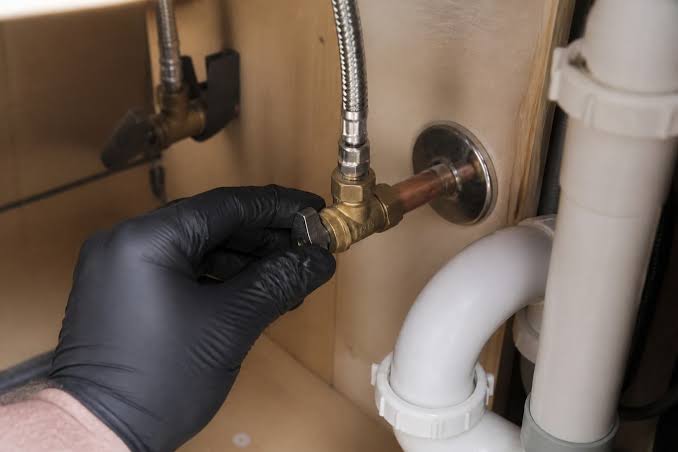
In practice, the pattern that repeatedly catches homeowners off guard is the shut-off valve. Many homes built before the mid-1980s have angle stop valves that have not been turned in decades. When a plumber tries to shut off the water, the valve seizes or leaks, and now you have a second repair running parallel to the faucet job.
Why Hiring a Qualified Plumber in Northridge Is Not a Casual Decision
Northridge occupies one of the most seismically significant zip codes in all of Los Angeles County. On January 17, 1994, the Northridge earthquake — a 6.7 magnitude event — caused an estimated $20 billion in damage across the region and permanently altered the underground infrastructure of every neighborhood within miles of the epicenter. Homes at the center of that zone have been living with the consequences ever since.
The shaking didn’t just crack walls and collapse freeways. It shifted underground sewer lines off their joints, fractured water supply pipes beneath concrete slabs, and introduced stress fractures into cast iron and galvanized steel lines that have been slowly failing for over 30 years. A plumber working on a Northridge home in 2026 is not just fixing today’s problem — they are working on infrastructure that has been under compressive stress since 1994.
Beyond the earthquake legacy, Northridge has significant portions of housing stock built between the 1950s and 1975, before modern pipe materials became standard. Many of these homes still have original galvanized steel supply lines and clay sewer laterals. Hiring an underqualified contractor who doesn’t understand the local conditions can turn a $300 drain cleaning into a $6,000 excavation project.
Faucet Type vs. Typical Installed Cost
Different faucet configurations carry meaningfully different price tags once installation is included. The table below uses ballpark installed totals (parts plus labor) based on standard residential conditions in a mid-cost U.S. market.
| Faucet Type | Faucet Cost (Parts Only) | Typical Labor Add-On | Installed Total Range |
|---|---|---|---|
| Basic single-handle (1 hole) | $50 to $100 | $90 to $150 | $140 to $250 |
| Mid-range pull-down sprayer | $100 to $300 | $120 to $200 | $220 to $500 |
| High-arc double-handle | $150 to $350 | $120 to $220 | $270 to $570 |
| Commercial-style pot filler | $200 to $600 | $200 to $400 | $400 to $1,000 |
| Smart/touchless sensor faucet | $300 to $700 | $150 to $250 | $450 to $950 |
| Custom or designer fixture | $500 to $1,500+ | $250 to $500 | $750 to $2,000+ |
The catch with pot fillers is not just the faucet price. They require a dedicated water line to be run to the wall behind your range, which means opening drywall. If that rough-in does not already exist, budget an additional $300 to $800 for the rough-in work alone.
Smart faucets, while increasingly popular in 2026, require a power source. Battery-operated models avoid electrical work, but hardwired models can add $100 to $200 in electrician costs if an outlet is not already present under the sink.
How Labor Rates Vary by Location
Regional pricing is real and significant. What a plumber charges in Arleta, California differs from what one charges in Tulsa, Oklahoma. The difference is not arbitrary; it reflects local licensing requirements, overhead costs, and market demand.
A good resource for understanding how service pricing in your area compares is to check a local plumber’s blog, which often publishes region-specific pricing breakdowns and seasonal cost trends. For Los Angeles homeowners specifically, kitchen plumbing los angeles services from a licensed contractor can give you a more precise quote based on your actual setup.
City-level labor rate benchmarks (2026):
- Los Angeles, CA: $120 to $200 per hour
- Chicago, IL: $100 to $175 per hour
- Houston, TX: $80 to $140 per hour
- Phoenix, AZ: $85 to $150 per hour
- Rural Midwest: $45 to $90 per hour
These figures reflect licensed plumbers pulling permits where required, not handyman or unlicensed labor. Unlicensed work may be cheaper upfront but creates liability issues if the work causes a leak that damages cabinetry or flooring.
Signs the Job Will Cost More Than Average
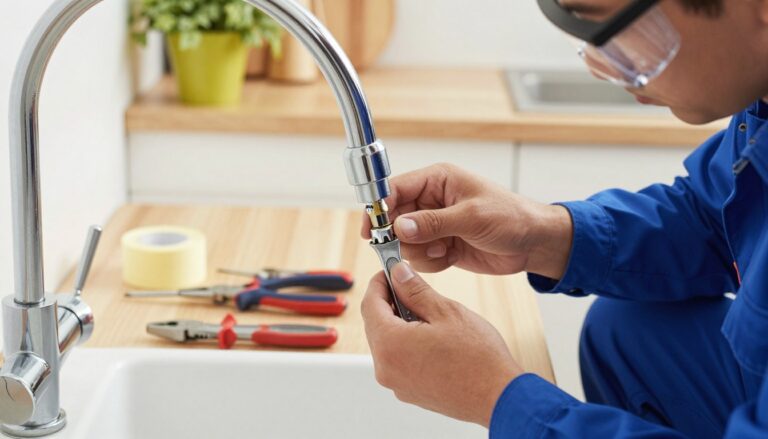
Not every faucet replacement is a clean one-for-one swap. Certain conditions consistently push the total above the midpoint of any estimate range.
Old galvanized or corroded supply lines: If your home still has galvanized steel supply lines rather than braided stainless or copper, the plumber may need to cut them out rather than unscrew them. That extends labor time and requires new fittings.
Non-standard hole configuration: Replacing a three-hole faucet with a single-hole model, or the reverse, requires drilling or covering holes. Some sinks, especially cast iron or granite composite, are difficult to drill without cracking. A deck plate cover for extra holes runs $20 to $60, but drilling a new hole in stone can cost $80 to $200 in added labor.
Limited under-sink access: If your sink cabinet is packed with cleaning supplies, a garbage disposal, and a water filtration system, the plumber spends more time working in a contorted position. That adds time to the job. In practice, clearing the cabinet yourself before the plumber arrives saves you $30 to $50 in labor.
Permit requirements: Most straightforward faucet swaps do not require a permit. But if you are running new supply lines or making structural changes to accommodate a pot filler, some California municipalities require a permit. In Los Angeles County, plumbing permits for new fixture installations can run $50 to $150.

Comparing DIY vs. Professional Installation
Some homeowners are comfortable doing a basic faucet swap themselves, especially if the shut-off valves work, the supply lines are braided stainless, and the existing hole configuration matches the new faucet. The cost savings are real.
| Factor | DIY Installation | Professional Installation |
|---|---|---|
| Labor cost | $0 (your time, 2-4 hours) | $90 to $400 depending on market |
| Risk of improper fit | Moderate if following instructions | Low with experienced plumber |
| Warranty protection | Faucet warranty intact if installed per specs | Often backed by plumber’s service guarantee |
| Handling complications | You stop, call a plumber, pay for emergency visit | Handled in same visit |
| Tools required | Basin wrench, channel-lock pliers, plumber’s tape | Supplied by plumber |
| Best for | Simple single-handle swaps on accessible sinks | Complex jobs, older homes, high-end fixtures |
The trade-off is clear. DIY saves $90 to $400 in labor but puts you on the hook if something goes wrong, such as a stripped nut that cracks the sink basin or a supply line that is not seated properly and leaks inside the cabinet for three days before you notice. Water damage to a cabinet can cost far more than the labor you saved.
What usually trips people up in a DIY swap is the basin nut, the large plastic or metal nut that threads onto the faucet shank from below. In a cramped under-sink space without a proper basin wrench, it becomes genuinely difficult to get enough torque to tighten it properly. A professional plumber carries the right tool and does this multiple times a week.

Frequently Asked Questions
Q: Is it cheaper to replace a kitchen faucet yourself or hire a plumber?
DIY saves on labor costs but carries real risk if your plumbing is older or the shut-off valves are unreliable.
For a simple swap on a modern sink with braided stainless supply lines and working shut-off valves, a confident DIYer can handle it in two to four hours with a basin wrench and channel-lock pliers. The savings range from $90 to $400 depending on your market. The trade-off is that any complication, such as a seized valve or a stripped mounting nut, can turn a Saturday project into an emergency plumber call, which typically costs more than a scheduled visit would have.
Q: How long does a professional kitchen faucet replacement take?
A straightforward faucet swap typically takes one to two hours for a licensed plumber.
That timeline assumes the shut-off valves work, the supply lines are in acceptable condition, and the new faucet matches the existing hole configuration in the sink. Add another 30 to 60 minutes if the plumber discovers corroded valves, needs to swap out old supply lines, or has to work around a garbage disposal and water filter system packed tightly into the cabinet. Clearing the cabinet yourself before the appointment keeps the job closer to that one-hour mark.
Q: Does homeowners insurance cover kitchen faucet replacement?
Standard homeowners insurance does not cover routine faucet replacement, but it may cover water damage caused by a faulty installation.
Insurance policies in the U.S. typically distinguish between maintenance items, which are the homeowner’s responsibility, and sudden accidental damage. Replacing a worn-out or outdated faucet falls into the maintenance category and is not a covered event. However, if a botched installation causes a slow leak that damages your cabinet, subfloor, or drywall, your policy’s dwelling coverage may apply after your deductible. This is one concrete reason to use a licensed plumber who carries liability insurance on their work.
Q: What is the most expensive part of replacing a kitchen faucet?
In most jobs, the faucet unit itself is the largest single line item, but labor becomes the dominant cost when complications arise.
A mid-range pull-down faucet from a brand like Kohler or Delta runs $150 to $300. Labor for a clean installation adds $90 to $300 on top of that. But when a plumber discovers two seized shut-off valves that need replacement ($75 to $150 each) and old galvanized supply lines that need cutting out, the labor cost can easily overtake the faucet price. High-end designer fixtures from brands like Brizo or Waterworks flip the equation entirely, with the unit alone costing more than the total labor for the job.
Q: How often should a kitchen faucet be replaced?
A quality kitchen faucet should last 15 to 20 years with normal use, though hard water and heavy use can shorten that significantly.
Faucets in areas with hard water, including much of Southern California, Arizona, and Texas, tend to show mineral buildup and cartridge wear earlier than those in soft-water regions. Signs that replacement makes more sense than repair include persistent dripping after a cartridge swap, cracked or pitted finish that cannot be cleaned, and handles that have loosened beyond adjustment. In practice, many homeowners replace a faucet not because it has failed completely but because a kitchen renovation or fixture upgrade makes the old model look out of place.
The Bottom Line on Kitchen Faucet Replacement Cost
Kitchen faucet replacement cost is not a fixed number, and treating it like one leads to budget surprises. The honest planning range for most American homeowners in 2026 is $250 to $600 for a quality mid-range faucet installed by a licensed plumber, with higher totals for designer fixtures, older homes with original plumbing, or high-cost metro markets like Los Angeles. Build in a 20% buffer above your baseline estimate and you will cover the most common complications without panic.
Your clearest next step is to select your faucet model before calling a plumber, confirm that the hole configuration matches your sink, and request an itemized quote that separates parts from labor. If you are in the Los Angeles area, Expertise Plumbing and Rooter is available 24 hours a day at (888) 807-7069 and can assess your specific setup before you commit to a fixture purchase.