
Plumbing services cover everything from a dripping faucet to a full sewer line replacement. A licensed contractor diagnoses the problem, explains the fix, and stands behind the work. This guide breaks down what these services include, what they typically cost, and how to find the right plumber for your home or business.
In the San Fernando Valley, housing stock spans the 1950s to today. That means matching the right repair — leak detection, drain cleaning, water heater replacement, repiping — to the actual condition of your pipes. It’s not a one-size-fits-all quote.
Most people searching for plumbing services are usually dealing with one of two things: a problem right now, or a nagging suspicion that something’s about to go wrong. Both are valid reasons to call a licensed plumber. Both deserve a straight answer instead of a sales pitch. This guide breaks down exactly what these services include and what they typically cost. It also covers how commercial plumbing differs from residential work, and what questions to ask before you hire anyone.
What Plumbing Services Include
At its core, plumbing service means diagnosing and repairing anything connected to a building’s water supply, drainage, or gas lines. A full-service plumbing company typically covers:
- Leak detection and repair — from a slow faucet drip to a hidden slab leak under a concrete foundation
- Drain and sewer work — clogged drains, hydro jetting, sewer camera inspections, trenchless sewer repair
- Water heater services — repair, replacement, and tankless conversions
- Repiping — whole-house repipe when galvanized or old copper lines are failing
- Fixture repair and installation — toilets, faucets, garbage disposals, shower valves
- Gas line work — installation, repair, and leak detection
- Emergency response — burst pipes, active leaks, gas emergencies
- Commercial plumbing — backflow testing, commercial drain cleaning, code-compliant repiping for businesses
That’s the short answer to “what do plumbing services include.” But the specifics matter more than the list. A company that only unclogs drains isn’t the same as a full-service plumbing contractor. That contractor can also repipe a 1960s Sylmar home or install a Rinnai tankless system in a Granada Hills kitchen. When you’re comparing providers, ask what’s actually within their scope, not just what’s on their homepage.
Residential Plumbing Repair: Common Issues We Fix
Residential plumbing repair is the bread-and-butter of any local plumbing company. In the San Fernando Valley, the same handful of issues show up again and again. Most homes here were built between the 1950s and 1980s. That means a lot of galvanized steel pipe from before 1970, copper installed through the 1970s–90s, and PEX in newer remodels. Each material ages differently. Knowing which one is running through your walls changes the diagnosis.
Common residential calls include:
- Clogged and slow drains — often grease, hair, or root intrusion rather than a single blockage
- Running or leaking toilets — usually a worn flapper or fill valve, sometimes a cracked tank
- Water heater failure — no hot water, rusty water, or a unit past its 10–15 year service life
- Slab leaks — a hidden leak under the foundation that shows up as a warm spot on the floor or an unexplained spike in the water bill
- Low water pressure — could be a simple aerator clog or a sign of corroded galvanized pipe throughout the house
- Burst or frozen pipes — rarer here than colder states, but not unheard of during winter cold snaps
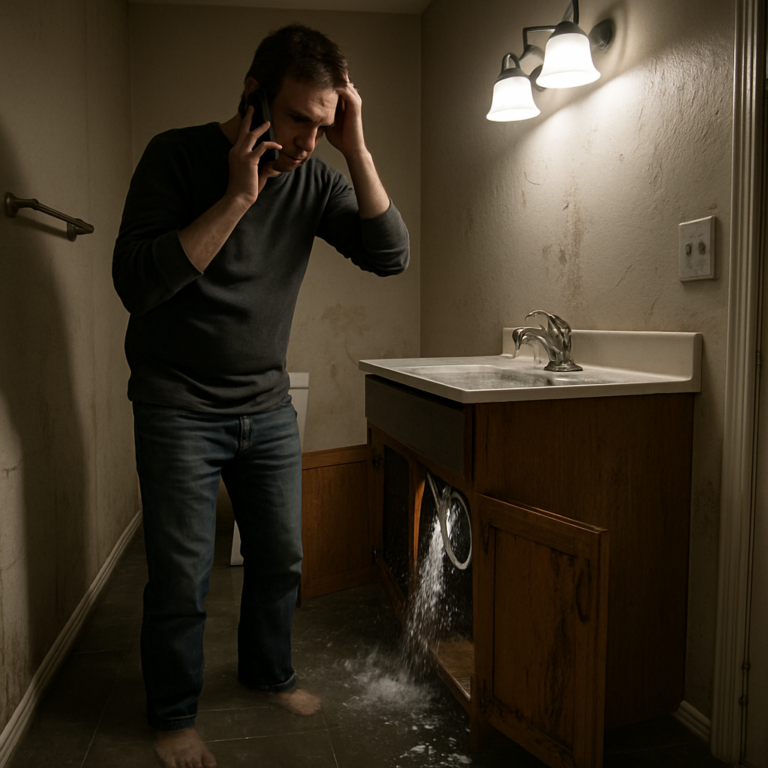
Hard water is common across the Valley because of the regional water source. It accelerates scale buildup inside water heaters and faucet cartridges. That’s one reason fixtures here often need attention sooner than in areas with softer water. Tree root intrusion into sewer lines is another persistent issue. It’s especially common in older neighborhoods like Granada Hills, Northridge, and Encino, where mature trees sit close to clay or older sewer laterals.
A good residential plumber will also flag structural risk. The 1994 Northridge earthquake shifted foundations and stressed pipe joints across the Valley, according to the U.S. Geological Survey. Some of that damage only becomes obvious decades later as slow leaks or cracked fittings. If your home hasn’t had a plumbing inspection since before that event, it’s worth having someone check. For homes with widespread galvanized pipe or repeated leak repairs in different spots, a whole-house repiping service is often more cost-effective long-term than patching the same system every year.
Commercial Plumbing Contractor Services for Businesses
Commercial plumbing services in Los Angeles County cover backflow prevention testing, high-capacity drain and sewer maintenance, code-compliant repiping, and rapid-response repairs for restaurants, medical offices, multi-unit buildings, and retail spaces. This work must meet stricter local code and inspection requirements than a typical single-family home repair.
The difference between residential and commercial plumbing isn’t just scale — it’s compliance. A restaurant’s grease interceptor, a medical office’s backflow preventer, and a multi-tenant building’s shared sewer line all fall under inspection schedules and permitting rules that a home plumbing job never touches. A commercial plumbing contractor working in Los Angeles County needs to understand backflow testing cycles and grease trap maintenance schedules. They also need to know how to keep a business operating — or minimize downtime — while the work happens.
Typical commercial plumbing scope includes:
- Backflow prevention testing and installation (often required annually by the local water authority)
- Commercial drain cleaning for kitchens, floor drains, and high-volume restrooms
- Commercial repiping for aging buildings or tenant improvements
- Sewer camera inspection before a lease renewal or property sale
- Emergency response scheduled around business hours to limit disruption
Key insight: Backflow prevention devices on commercial properties typically need annual testing to stay compliant. Many business owners don’t realize this until a water utility notice arrives, so building it into a maintenance calendar avoids fines and last-minute scrambling.
Businesses across the San Fernando Valley — from Van Nuys warehouses to Encino medical suites — need a contractor who treats commercial work as its own discipline, not a residential job scaled up. If you’re a property manager or business owner comparing quotes, ask specifically about backflow certification, licensing for commercial-scope work, and whether the contractor has handled your building type before.
Drain and Sewer Services Explained
Drain and sewer problems get lumped together in most marketing copy. But they’re really a sequence of related services that build on each other. Understanding the order helps you avoid paying for the wrong fix.
- Drain cleaning handles routine clogs — hair, grease, soap scum — usually with a cable (snake) or hydro jetting for tougher buildup.
- Hydro jetting uses high-pressure water to scour the inside of a pipe clean, removing grease and root hair-fine intrusions that a cable alone can’t clear. It’s more thorough and often used on recurring clogs.
- Sewer camera inspection is the diagnostic step: a waterproof camera goes down the line to show exactly where a blockage, crack, or root intrusion sits, and how bad it is. This is what should happen before anyone recommends digging up a yard.
- Sewer line repair or replacement follows the camera findings. If damage is localized, trenchless methods like pipe lining (CIPP — cured-in-place pipe) or pipe bursting can fix a sewer line without excavating the whole yard.
That sequence matters. A company that jumps straight to “you need a new sewer line” without a camera inspection first is skipping the step that actually justifies the recommendation. Root intrusion is a particularly common culprit across older Valley neighborhoods, where clay sewer laterals sit near mature trees. Granada Hills, Northridge, and Encino see this often enough that it’s one of the more predictable repairs in the area.
Trenchless sewer repair has become the preferred option where the pipe is otherwise sound but has one or two problem sections. It avoids tearing up landscaping, driveways, or hardscape. It costs more per linear foot than traditional dig-and-replace in some cases. But the savings on restoration work often make it a wash or better. For a fuller rundown of drain, sewer, and related plumbing work, the full menu of plumbing services covers what’s typically available in a residential or light-commercial job.
Emergency Plumbing: When to Call Immediately
Not every plumbing problem is an emergency, but some genuinely are. Knowing the difference saves money and prevents damage.
Call immediately for:
- A burst pipe or active flooding
- Gas odor near a water heater, stove, or gas line (leave the area and call from outside)
- Sewage backing up into a sink, tub, or floor drain
- No water at all across the whole house
- A water heater leaking heavily or making unusual popping/banging noises
Can typically wait for a scheduled appointment:
- A single slow drain
- A running toilet
- Low water pressure at one fixture
- A dripping faucet
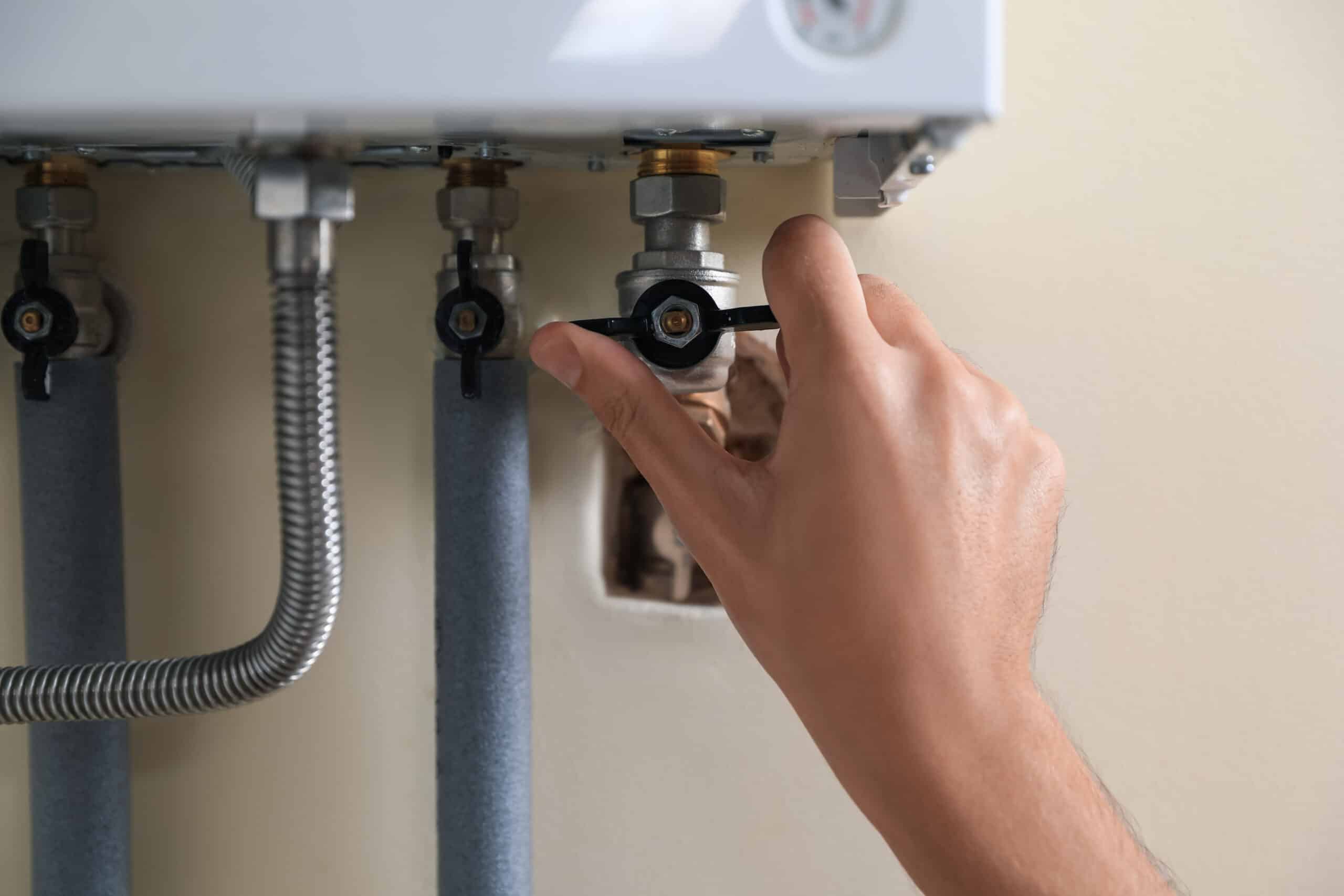
24/7 emergency plumbing exists because water damage compounds fast. A pipe that bursts overnight can soak flooring, drywall, and insulation before morning if no one shuts off the water. Knowing where your home’s main shutoff valve is located, and testing that you can actually turn it, is one of the simplest things a homeowner can do before an emergency ever happens.

Ready to Schedule Your Installation?
Call Expertise Plumbing and Rooter at (888) 807-7069 today and ask for a free on-site assessment. A licensed technician will evaluate your gas line, venting layout, water quality, and household demand, then give you a transparent, itemized quote before any work begins. No surprises, no pressure.
Contact Us!
888-807-7069

Water Heater Services
Water heater problems are one of the most common reasons homeowners search for plumbing services. The right fix depends heavily on the unit’s age and type.
- Repair makes sense for units under about 8–10 years old with an isolated issue — a faulty thermostat, a bad heating element, or sediment buildup causing rumbling noises.
- Replacement (tank) is usually the better call once a tank-style unit passes 10–12 years, especially if it’s showing rust-colored water or visible corrosion at the base.
- Tankless conversion appeals to households that want continuous hot water and lower standby energy loss, though it requires proper gas line and venting sizing to work correctly.
Hard water across much of the Valley speeds up sediment buildup inside tank water heaters. That’s part of why units here sometimes need attention sooner than the textbook lifespan suggests. Installing a tankless system correctly — sized to the home’s fixture count and gas supply — matters more than people expect. A poorly sized unit means lukewarm showers and a warranty headache. Authorized Rinnai Pro Partner installers, for instance, are factory-trained specifically because incorrect installation can void the manufacturer’s warranty on tankless units.
Smart Home and Preventive Plumbing Maintenance
Preventive maintenance is the cheapest plumbing service you’ll ever buy, because it heads off the five-figure repairs. A basic annual or biannual check should cover:
- Water heater flush to clear sediment
- Visual inspection of exposed supply lines and shutoff valves
- Slow-drain check before it becomes a full clog
- Water pressure test (too-high pressure quietly stresses every fixture and joint in the house)
- Smart leak sensor and smart water meter installation for early detection
Smart leak sensors and automatic shutoff valves have become a genuinely useful add-on rather than a gimmick. A sensor placed near a water heater, under a kitchen sink, or in a laundry room can flag a slow leak days before it’s visible. An automatic shutoff can cut water entirely if a pipe bursts while no one’s home. For a house with older galvanized plumbing or a history of slab leaks, that’s cheap insurance against a much larger claim.
FAQ: Plumbing Services Questions People Actually Ask
What do plumbing services include?
Plumbing services span diagnosis and repair of anything tied to a building’s water, drainage, and gas systems — leak detection, drain and sewer cleaning, water heater repair and installation, repiping, fixture repair, gas line work, and emergency response. Full-service companies also offer commercial plumbing, including backflow testing and code-compliant repiping for businesses.
The exact list varies by company, so it’s worth confirming whether a provider handles both routine repairs and bigger jobs like whole-house repiping or trenchless sewer work, especially if you’re dealing with an older home.
How much an hour should a plumber charge?
Licensed plumber hourly rates vary widely by region, experience, and whether the call is standard business hours or after-hours emergency work. Rates generally land somewhere in the moderate-to-high double-digit range per hour. Emergency and weekend calls typically carry a premium over standard daytime rates.
Rather than shopping purely on hourly rate, it’s more useful to ask for a total project estimate once the plumber has actually seen the problem. Many jobs are priced flat-rate rather than billed hour by hour.
What do most plumbers charge for a service call?
Most licensed plumbers charge a flat service call or trip fee just to diagnose the problem, typically in the low hundreds of dollars. This is often credited toward the repair if you move forward with the work. This fee covers the plumber’s time getting to your property and doing an initial assessment, separate from the cost of the actual repair.
Ask upfront whether the service call fee is waived or applied to the final invoice — reputable companies are straightforward about this before they arrive.
How to find an honest plumber?
Start by verifying the license — in California, that means confirming a valid C-36 Plumbing Contractor license through the CSLB’s public license lookup. Beyond licensing, look for a company that’s insured and bonded, gives written estimates before starting work, and can clearly explain what’s driving the cost of a job rather than giving a vague number.
Local tenure is a strong signal too. A plumbing contractor who’s worked the same region for many years has a track record and reputation that’s easy to check through reviews and word of mouth. They’re also less likely to disappear if a warranty issue comes up later.
What's the difference between residential and commercial plumbing?
Residential plumbing repair deals with single-family homes and typically smaller-scale systems — one water heater, one sewer lateral, standard fixture counts. Commercial plumbing contractor work involves larger systems, stricter code compliance (like mandatory annual backflow testing), grease interceptors for food service, and scheduling that works around business hours to avoid shutting down operations.
The equipment and diagnostic tools often overlap, but commercial jobs usually require more permitting knowledge and coordination with property managers or multiple tenants.
Is it worth getting a plumbing maintenance plan, or should I just call when something breaks?
Preventive maintenance — an annual water heater flush, pressure check, and visual inspection of visible plumbing — is generally cheaper than reactive repair, especially in areas with hard water or older pipe materials that degrade gradually. Catching a slow leak or early corrosion during a routine visit is far less expensive than dealing with a slab leak or burst pipe later.
That said, not every home needs a formal maintenance contract. A newer home with PEX plumbing and no history of problems may only need occasional checks, while an older home with galvanized pipe or a history of leaks benefits more from regular visits.
Can I do any plumbing repairs myself, or should I always call a professional?
Some things are genuinely fine to DIY: plunging a clogged toilet, replacing a toilet flapper, clearing a P-trap under a sink, or swapping a faucet aerator. These are low-risk, low-skill tasks that don’t involve the main water supply or gas lines.
Call a licensed plumber for anything involving gas lines, main water shutoff work, sewer line issues, water heater installation, or any repair that requires opening a wall or slab. Beyond the safety risk, incorrect DIY work on gas or main plumbing lines can void insurance coverage or violate local code, turning a small mistake into an expensive one.
How Much Do Plumbing Services Cost?
Plumbing prices vary by job type, but a few general patterns hold across the industry. Most licensed plumbers charge either a flat rate for common jobs (toilet replacement, faucet repair, drain clearing) or an hourly rate for diagnostic and open-ended work. Often there’s a separate service call or trip fee just to show up and assess the problem.
Hourly rates for licensed plumbers commonly fall in the moderate-to-high double digits per hour. Service call fees are typically a flat charge in the low hundreds. Both vary significantly by region, time of day, and whether the call is after-hours or emergency. Bigger jobs like whole-house repiping, sewer line replacement, or tankless water heater installation are usually quoted as a project total rather than an hourly rate. That’s because the scope is defined upfront after an inspection.
Key insight: The service call fee is rarely the biggest cost driver. Access difficulty (crawl space vs. open wall), pipe material, and whether permits are required typically swing the final price more than the base hourly rate does.
As one concrete example of transparent, upfront pricing: some companies offer promotional pricing on specific jobs, such as same-location tankless water heater installation starting at a set price after manufacturer and utility rebates. That’s useful because it gives homeowners a real anchor point instead of a vague “call for pricing.” Details like rebate eligibility, permit fees, and whether the installation is a straight swap versus requiring new gas or venting work all affect the final number. Any quote should spell those out clearly before work starts.
How to Choose a Reliable Plumbing Company
Finding an honest plumber comes down to verifiable facts, not gut feeling. Before hiring anyone for residential or commercial plumbing work, check:
- License status — in California, contractors doing plumbing work should hold a C-36 Plumbing Contractor license, verifiable directly through the California State License Board
- Insurance and bonding — protects you if something goes wrong mid-job
- Written estimates — a legitimate company gives you a scope and price before starting, not after
- How long they’ve served the area — a contractor who’s worked the same neighborhoods for decades knows the local pipe materials, soil conditions, and code quirks
- Manufacturer certifications — matters for specialty installs like tankless water heaters, where factory training affects warranty coverage
- Clear answers about pricing — a company willing to explain what drives cost, rather than dodging the question, is a good sign
Longevity and local knowledge count for more than they get credit for. A plumber who’s been working the San Fernando Valley for close to three decades has likely seen every era of pipe material in the area — galvanized steel from the 1950s, copper from the ’70s through ’90s, and modern PEX. They know which neighborhoods tend toward root intrusion, hard water scaling, or earthquake-related pipe stress. That kind of pattern recognition speeds up diagnosis and avoids guesswork.
If you’re ready to get a straight answer on a repair, replacement, or new installation, reach out through the contact page to schedule a visit.
Related Pages and Next Steps
Whether you’re dealing with a stubborn drain, an aging water heater, or planning a commercial tenant improvement, the right move is getting an actual assessment rather than guessing at the fix. For homes with widespread pipe corrosion, a full repiping evaluation can resolve recurring leaks for good instead of patching the same problem repeatedly.
Reliable plumbing services come down to three things: an honest diagnosis, a clear price before work starts, and a contractor who’s licensed, insured, and actually familiar with the housing stock in your area. If you’re in Sylmar, Granada Hills, or anywhere across the San Fernando Valley and need a straight answer on a plumbing problem, contact Expertise Plumbing & Rooter to schedule a visit.
Resources / References
- California Contractors State License Board (CSLB) — official license verification for contractors, including C-36 Plumbing Contractors URL: https://www.cslb.ca.gov
- United States Geological Survey — background on the 1994 Northridge Earthquake and its regional impact URL: https://www.usgs.gov/programs/earthquake-hazards/1994-northridge-earthquake