
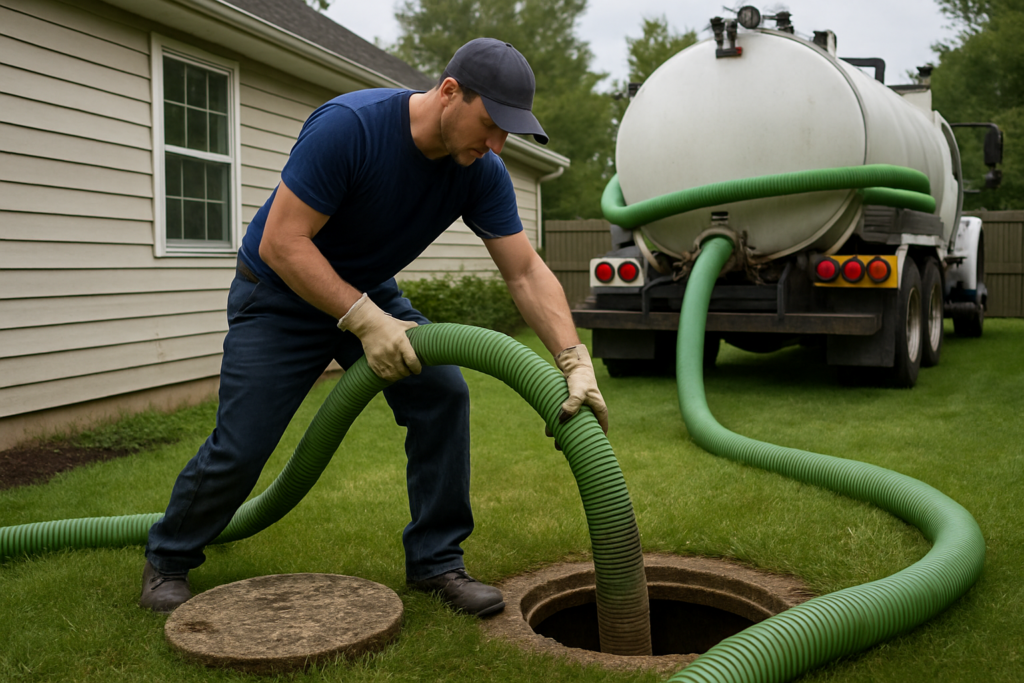
Most households should pump their septic tank every 3 to 5 years, though your actual schedule depends on tank size, the number of people in your home, and daily water usage. Skipping pumps or waiting too long can lead to system failures, sewage backups, and repair bills that run into the thousands of dollars.
Key Takeaways
- The standard recommendation for septic tank pumping frequency is every 3 to 5 years, but this varies significantly by household.
- Larger households and smaller tanks require more frequent pumping, sometimes every 1 to 2 years.
- Solid waste accumulation, not just liquid overflow, is the main reason tanks need regular pumping.
- Additives and “tank treatments” sold at hardware stores do not replace professional pumping.
- Keeping a service log and knowing your tank’s location saves time and money at every appointment.
- Early signs of a failing system, like slow drains or wet spots near the drain field, should never be ignored.
Why Your Tank Size and Household Size Are the Two Biggest Variables
Septic systems are not one-size-fits-all. A 1,000-gallon tank serving two people behaves very differently from a 1,500-gallon tank serving six. The math is straightforward: more people means more waste, more water usage, and faster accumulation of solids at the bottom of the tank.
The EPA estimates that the average American uses about 70 gallons of water per day at home. Multiply that by the number of people in your house, and you get a clear picture of how fast your tank fills up. Here is a general breakdown of typical pumping intervals based on tank size and household size:
| Tank Size (Gallons) | 1-2 People | 3-4 People | 5-6 People |
|---|---|---|---|
| 750 | 2-3 years | 1-2 years | 1 year |
| 1,000 | 4-5 years | 3-4 years | 2-3 years |
| 1,250 | 5-6 years | 3-4 years | 2-3 years |
| 1,500 | 6-7 years | 4-5 years | 3-4 years |
| 2,000 | 8+ years | 5-6 years | 4-5 years |
These are averages. Homes with garbage disposals, frequent guests, or older systems will trend toward the shorter end of each range.

What Actually Happens Inside a Septic Tank
Understanding what goes on inside the tank helps you appreciate why pumping is non-negotiable. When wastewater enters your tank, it separates into three layers:
- Scum: Grease, oils, and lightweight solids that float to the top.
- Effluent: The liquid layer in the middle that flows out to the drain field.
- Sludge: Heavy solids that sink and accumulate at the bottom.
The tank handles liquid naturally. Effluent exits through an outlet baffle and filters into the drain field, where soil bacteria break it down. The problem is sludge. It does not go anywhere on its own. Over time, sludge builds up from the bottom, and scum builds down from the top. When these two layers get close enough, solid waste starts escaping into the drain field, clogging the soil and destroying the system.
A professional pump-out removes all three layers and resets the process. No enzyme additive, bacterial treatment, or home remedy can do this. Those products may slow sludge accumulation slightly, but they are not a substitute for physically emptying the tank.
Proper maintenance of your septic system also ties directly to the rest of your home’s plumbing health. If you are already dealing with slow indoor drains, a drain cleaning service los angeles can help determine whether the issue is isolated to indoor pipes or connected to a wider system problem.
Factors That Change Your Pumping Schedule
Several specific habits and home features can push your schedule earlier than the average table suggests:
Garbage disposal use: Grinding food waste sends extra organic solids into the tank. Homes with active garbage disposal use may need pumping 30 to 50 percent more often than those without.
High-efficiency appliances: Washing machines and dishwashers that run multiple cycles daily push more water through the system. More water means the sludge and scum layers are pushed around more aggressively, which can speed up clogging.
Number of bathrooms: A home with four bathrooms and frequent use will load the tank faster than a three-bedroom home where half the rooms are rarely occupied.
Harsh chemicals: Bleach, drain cleaners, and antibacterial soaps in large quantities kill the beneficial bacteria inside your tank. Those bacteria are responsible for breaking down waste, so killing them accelerates sludge buildup.
Non-flushable items: Wipes labeled “flushable,” paper towels, feminine products, and dental floss do not break down inside the tank. They add to solid accumulation much faster than toilet paper.
If you live in an older home and have not recently had the system inspected, it is worth scheduling a full assessment alongside your pump-out. Issues like corroded baffles or cracked lids often go unnoticed until a major failure occurs. For homes connected to municipal sewers, similar inspections apply. A sewer repair los angeles specialist can identify line damage before it causes significant disruption.
Warning Signs Your Tank Needs Pumping Now
Even if you are on a regular schedule, certain signs indicate your tank needs immediate attention. Do not wait for your next scheduled appointment if you notice any of the following:
- Slow drains throughout the house: One slow drain is usually a clog. Multiple slow drains at once often point to a full or failing septic tank.
- Gurgling sounds from toilets or drains: This typically means air is being pushed back through the system due to a blockage or overfull tank.
- Sewage odors inside or outside: If you smell sulfur or raw sewage near your yard or inside your home, the tank may be backing up.
- Wet or unusually green patches in the yard: Saturated soil above the drain field or tank suggests effluent is surfacing instead of filtering properly.
- Sewage backup in the lowest fixtures: Toilets or floor drains on the lowest level of your home backing up is a serious warning sign.
Any combination of these symptoms warrants a call to a licensed professional immediately. Waiting even a few days can allow sewage to migrate into your home’s lower-level plumbing, and at that point the cleanup and repair costs multiply quickly. If you are facing a sudden backup with no time to spare, an emergency plumber los angeles can respond quickly and assess whether the problem is septic-related or confined to interior plumbing.

How to Track and Plan Your Pumping Schedule
One of the simplest things you can do as a homeowner is keep a service log. Write down the date of every pump-out, the name of the company, how full the tank was (most pumpers will tell you the sludge depth before and after), and any observations the technician made. This log becomes invaluable if you sell the home, refinance, or experience a system issue years down the line.
Here are a few practical steps for staying ahead of your schedule:
- Know your tank size and location: If you bought your home without this information, check with your local county health department. Most jurisdictions maintain records of permitted septic systems with dimensions and placement data.
- Set a calendar reminder: Whether your interval is two years or five, set a recurring reminder 3 months before your target date so you have time to get quotes and schedule the appointment.
- Get a report after every pump-out: A reputable service will inspect the inlet and outlet baffles, check the tank lid condition, and note any signs of damage. Ask for a written summary.
- Adjust after life changes: Adding a family member, installing a garbage disposal, or putting in a new bathroom all shift your baseline. Recalculate your interval when household usage changes significantly.
Some homeowners also upgrade related systems around the same time as septic service. If your water heater is aging and you are already coordinating plumbing work, bundling tasks can save you money. A water heater installation los angeles appointment is often something homeowners put off longer than they should.
Things to Know
- Most states do not legally require scheduled septic pumping for single-family homes, but many counties do require inspections at the time of property sale.
- A pump-out typically costs between $300 and $600 in most U.S. markets, though prices vary by tank size, accessibility, and location.
- “Risers” are extensions that bring the access lid to ground level, making future pump-outs faster and less expensive. Many older systems have buried lids that add labor time to every service call.
- The drain field is just as critical as the tank. A perfectly maintained tank can still fail if the drain field soil is compacted, flooded, or loaded with surfacing solids.
- Driving or parking heavy vehicles over the tank or drain field can crack lids, damage baffles, and compress drain field soil. Keep that area clear.
- If you are buying a home with a septic system, always request a full inspection, not just a pump-out. An inspection evaluates the components; a pump-out just empties the tank.
Ready to Schedule Your Pump-Out?
Check your last service record right now. If you do not have one, that alone is a signal that it has probably been too long. Call a licensed septic service company in your area, tell them your tank size and household size, and ask them to set a recommended interval based on those specifics. If your home is in the Los Angeles area or a surrounding county, professionals can connect you with licensed experts who handle both septic and full residential plumbing needs. Getting this scheduled is a single phone call that protects one of the most expensive systems in your home.

Frequently Asked Questions
Q: How do I know what size septic tank I have?
Your tank size is typically listed in your home’s original building permit or septic system installation records.
Contact your local county health department or environmental services office and provide your property address. Most jurisdictions keep these records on file. If not, a licensed pumper can determine the size during a service visit.
Q: Can I pump my septic tank myself?
No, septic tank pumping must be performed by a licensed professional with a vacuum truck and proper waste disposal permits.
Attempting to do it yourself is illegal in virtually every U.S. state and physically dangerous due to toxic gases including hydrogen sulfide. Improper disposal of septic waste also carries serious environmental penalties under EPA regulations.
Q: Does heavy rainfall affect how often I need to pump?
Yes, unusually heavy rainfall can saturate the drain field and push solids back toward the tank, effectively reducing its available capacity.
If your area experiences an exceptionally wet season, consider scheduling an inspection sooner than your typical interval. This is especially important in regions prone to flooding or clay-heavy soils that drain slowly.
Q: Are there additives that extend the time between pump-outs?
Bacterial additives and enzyme treatments may support biological activity in the tank, but no product eliminates the need for regular pumping.
Sludge physically accumulates at the bottom of the tank regardless of additives. The only way to remove it is mechanical pump-out. The EPA and most state health departments do not endorse any additive as a replacement for scheduled service.
If you have a specific commercial plumbing need not listed here, please call us to discuss your requirements.
Q: What happens if I never pump my septic tank?
An unpumped tank will eventually overflow solids into the drain field, clogging the soil and requiring a complete drain field replacement costing $5,000 to $25,000 or more.
Neglected systems can also cause sewage backups inside the home, create health hazards from pathogen exposure, and result in code violations that complicate property sales. Regular pumping is significantly cheaper than any of these outcomes.
The Bottom Line on Septic Tank Pumping Frequency
Staying on top of your septic tank pumping frequency is one of the most cost-effective home maintenance habits you can develop. The average pump-out costs a few hundred dollars. A failed drain field or sewage backup can cost you tens of thousands. The math is not complicated.
Use the table in this article to estimate your starting interval, adjust based on your household habits, and keep a written service record after every appointment. Your septic system will last decades with proper care, but only if you give it the attention it needs on a consistent schedule.