
Low water pressure turns everyday tasks into frustrating chores. The most common causes of low water pressure include clogged pipes, failing pressure regulators, corroded supply lines, municipal supply issues, and partially closed shutoff valves, all issues that can help you address. Understanding which problem you’re dealing with determines whether it’s a quick DIY fix or a job for a licensed plumber
Key Takeaways
- Low water pressure can stem from issues inside your home, at the meter, or from the municipal supply line.
- Corroded or scaled pipes are among the most damaging long-term causes and often require professional pipe replacement.
- A faulty pressure regulator is one of the most common single-point causes and is relatively affordable to fix.
- Partially closed shutoff valves are a surprisingly easy issue to overlook after any recent plumbing work.
- If multiple fixtures are affected simultaneously, the problem is almost always upstream, closer to the main supply.
- Ignoring low water pressure can accelerate wear on appliances like water heaters and washing machines.
The Most Common Causes of Low Water Pressure at Home
Not all pressure problems look the same. A weak trickle at one bathroom faucet points to a localized issue, while low pressure across every fixture in the house suggests something is wrong at the main supply level. Here is a breakdown of the most frequent culprits.
Partially Closed Shutoff Valves
Every home has at least two main shutoff valves: one near the water meter and one where the main line enters the house. If either valve was recently adjusted during repairs and not fully reopened, you’ll notice a noticeable drop in flow throughout the home. This is one of the first things to check because the fix takes about five seconds. Turn both valves counterclockwise until they stop. If the pressure improves immediately, the valve was the problem.
Faulty or Miscalibrated Pressure Regulator
A pressure regulator (also called a pressure-reducing valve, or PRV) controls the water pressure entering your home from the municipal supply. According to the International Association of Plumbing and Mechanical Officials, most residential systems are set to deliver between 45 and 80 PSI. When the PRV wears out or becomes miscalibrated, it can drop your pressure well below that range. PRVs typically last 10 to 15 years. If yours is older, replacement is usually the most reliable solution, and a licensed plumber can swap it out in a couple of hours.
Clogged or Corroded Pipes
This is where things get more serious. Over years of use, mineral deposits, rust, and sediment build up inside your pipes. Homes built before 1970 are particularly vulnerable because they often still have galvanized steel pipes, which corrode from the inside out. The U.S. Geological Survey notes that hard water, which is common across much of the country, accelerates mineral scaling inside supply lines. As the interior diameter of a pipe narrows, water flow slows down. You will usually notice this problem getting gradually worse over months or years rather than appearing overnight.
Failing or Outdated Water Heater
A water heater that is heavily scaled on the inside will restrict hot water flow significantly. If you only notice low pressure when running hot water, your water heater is likely the source. Sediment builds up at the bottom of the tank and, over time, makes its way into the outlet pipe. If your unit is more than 10 years old, it may be time to consider a water heater installation los angeles from a qualified plumber who can assess whether a replacement or flush will restore proper flow.
Leaks in the Supply Line
A hidden leak in your main supply line or inside the walls quietly diverts water away from your fixtures. Even a small leak can drop measurable pressure throughout the house. Signs of a hidden leak include unexplained spikes in your water bill, damp spots on walls or ceilings, and the sound of running water when no fixtures are open. According to the Environmental Protection Agency’s WaterSense program, household leaks waste nearly 1 trillion gallons of water annually across the U.S. If you suspect a leak, getting a professional inspection quickly prevents further structural damage.
Municipal Supply Problems
Sometimes the issue has nothing to do with your plumbing. Your city’s water main can experience pressure drops during peak usage hours, when a nearby main breaks, or after a major maintenance event. Check with neighbors to see if they’re experiencing the same issue. If they are, contact your local water utility. The American Water Works Association recommends that residents report persistent pressure issues directly to their utility provider, since documentation helps utilities identify system-wide problems faster.
How to Diagnose the Problem Before Calling a Plumber
Municipal work and main breaks are common in older parts of the San Fernando Valley. If your street has had recent work done, it is worth understanding what happens to your home plumbing afterward. A systematic approach saves you time and money. Follow these steps before reaching out for professional help.
Step 1: Isolate the location Test multiple fixtures throughout your home. If only one faucet has low pressure, the aerator on that fixture is likely clogged. Unscrew the aerator (the mesh screen at the tip of the faucet), rinse it under clean water, and reattach it. Pressure often restores immediately with the help of a drain cleaning service los angeles if debris buildup is the underlying cause.
Step 2: Check your shutoff valves Locate both main shutoff valves and confirm they are fully open.
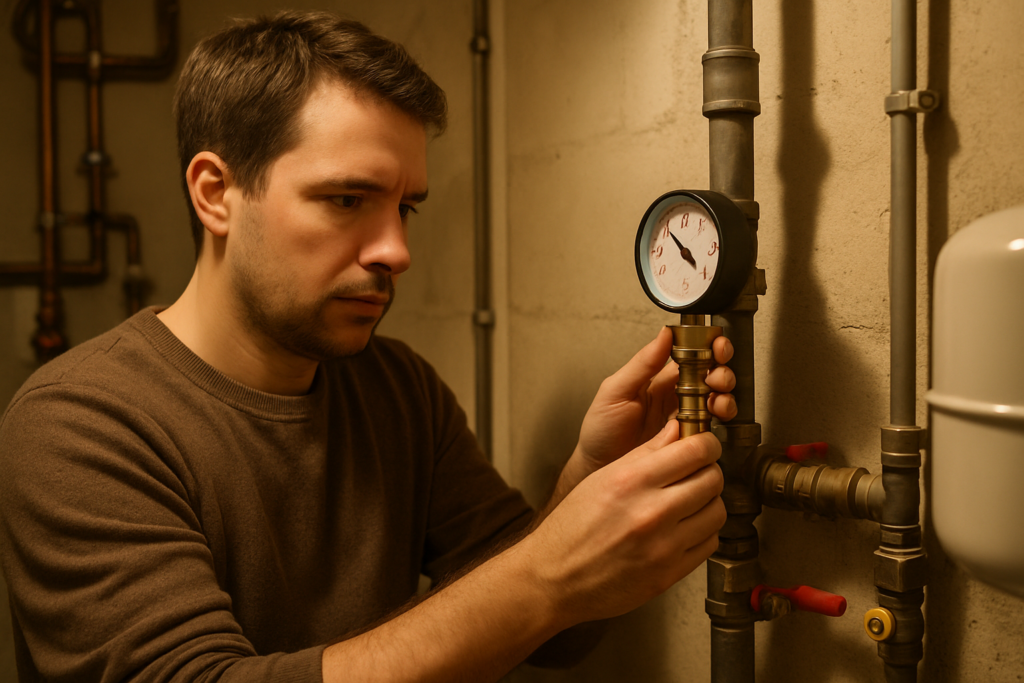
Step 3: Test your water pressure directly A simple pressure gauge, available at most hardware stores for under $15, threads onto an outdoor hose bib. A reading below 40 PSI confirms a pressure problem. Anything above 80 PSI indicates excessive pressure, which is a separate issue that strains your pipes and appliances.
Step 4: Compare hot vs. cold If only hot water has low pressure, the issue is isolated to the water heater or the hot water supply line.
Step 5: Look for visible signs of leaks Check under sinks, around the base of your water heater, and along exposed pipes in the basement or crawlspace.
| Issue | Location | DIY Fixable? | Urgency |
|---|---|---|---|
| Clogged aerator | Individual fixture | Yes | Low |
| Partially closed valve | Main supply | Yes | Low |
| Faulty PRV | Main supply entry | Sometimes | Medium |
| Corroded pipes | Throughout home | No | High |
| Water heater scaling | Hot water system | Partial | Medium |
| Supply line leak | Inside walls/yard | No | High |
| Municipal supply issue | Outside home | No | Contact utility |
When Pipe Corrosion Is the Real Problem
Pipe corrosion is one of the more serious causes of low water pressure because it is progressive and difficult to spot without a professional inspection. Galvanized steel pipes, which were standard in homes built before the 1970s, have an average lifespan of 40 to 70 years according to plumbing standards cited by the National Association of Home Builders. Once corrosion starts, flushing or descaling only provides temporary relief. Full or partial pipe replacement is usually the only permanent fix.
If you are already dealing with related plumbing challenges, such as slow drains caused by buildup from deteriorating pipes, professional help like an emergency plumber los angeles can clear blockages and give a clearer picture of your system’s overall condition. Corrosion debris often migrates downstream and causes secondary clogs in drain lines.

Sewer Line Problems and Their Connection to Water Pressure
This connection surprises most homeowners: a compromised sewer line can sometimes contribute to broader plumbing performance issues, including perceived pressure problems. When sewer lines crack, collapse, or become blocked, the backpressure can affect how water moves through the overall system. If you have noticed gurgling drains, slow drainage across multiple fixtures, or foul odors, the situation may require sewer repair los angeles rather than a simple pipe flush.
Sewer issues left unaddressed can escalate quickly, especially in older neighborhoods where clay or cast iron lines are still in place. A professional camera inspection of your sewer line takes less than an hour and gives you a definitive answer.
Things to Know
- Low pressure that appears only in the morning or evening often points to high neighborhood usage rather than a problem inside your home.
- A pressure reading below 20 PSI is considered an emergency, as it makes your home vulnerable to backflow contamination.
- Water softeners can occasionally reduce flow rate if the resin bed becomes exhausted or clogged, separate from pressure issues at the regulator.
- New construction near your home can temporarily affect municipal water pressure due to increased demand and pipe rerouting.
- If your home uses a well pump rather than municipal supply, low pressure almost always points to the pump, pressure tank, or well itself.
- Installing a booster pump is a legitimate solution for homes that consistently receive low pressure from the municipal supply, typically those at the end of a distribution line.
Ready to Restore Full Water Pressure?
If you have worked through the diagnostic steps above and still cannot identify the source of the problem, the next step is a professional assessment. A licensed plumber can run a full system pressure test, use camera inspection tools to check pipe interiors, and identify leaks that are invisible to the naked eye.
For urgent situations where you need help quickly, contacting an emergency plumber los angeles ensures a qualified technician can respond fast before a hidden leak or pressure failure causes water damage. You can also visit Expertise Plumbing directly to learn about available services and schedule an inspection at a time that works for your schedule.

Frequently Asked Questions
Q: How do I know if my water pressure is low or if it just feels that way?
Use a pressure gauge to get an objective measurement before assuming there is a problem.
Thread an inexpensive gauge onto your outdoor hose bib and take a reading. Residential systems should deliver between 45 and 80 PSI. Anything under 40 PSI confirms genuinely low pressure that warrants investigation.
Q: Can low water pressure damage my appliances?
Yes, consistently low pressure can cause appliances like dishwashers and washing machines to underperform and wear out faster.
These appliances are designed to operate within a specific pressure range. Consistently low supply pressure forces pumps and internal components to work harder, shortening their service life and sometimes triggering error codes.
Q: Is low water pressure in just one room different from low pressure throughout the house?
Yes, and the distinction is one of the most useful diagnostic clues you have.
A single-room or single-fixture issue points to a localized problem like a clogged aerator, a partially closed valve on that supply line, or a failing fixture. Whole-house low pressure points to the PRV, the main shutoff valve, or a supply line issue.
Q: How much does it cost to fix low water pressure?
Costs vary widely depending on the cause, ranging from under $20 for a clogged aerator to several thousand dollars for pipe replacement.
A PRV replacement typically runs between $250 and $500 including labor. Pipe replacement for a full home can range from $4,000 to $15,000 depending on the home’s size and pipe material.
Q: Does water pressure drop in winter?
Yes, cold temperatures can cause pipes to contract slightly and increase viscosity-related resistance, which can reduce measured pressure.
More significantly, winter increases the risk of frozen pipes, which can block flow entirely. Homes in colder climates should insulate exposed supply pipes to reduce both freezing risk and seasonal pressure fluctuation.
If you have a specific commercial plumbing need not listed here, please call us to discuss your requirements.
The Bottom Line on Causes of Low Water Pressure
Municipal work and main breaks are common in older parts of the San Fernando Valley. If your street has had recent work done, it is worth understanding what happens to your home plumbing afterward.
The causes of low water pressure range from a simple closed valve to serious pipe corrosion that requires immediate professional attention. The most important thing you can do is accurately identify whether the problem is localized to one fixture or affects your entire home. That single distinction narrows down the likely cause significantly and tells you whether a screwdriver and five minutes will solve it, or whether you need a licensed plumber on site.
Start with the free and easy checks: aerators, shutoff valves, and a basic pressure reading. If those checks do not resolve the issue, do not delay reaching out to a professional. Pressure problems that stem from pipe corrosion or supply line leaks only get worse and more expensive over time.